Answer to Question 1
Answer: According to Urie Bronfenbrenners ecological systems theory, human development takes place within a complex system of relationships affected by multiple levels of the surrounding environment. Bronfenbrenner envisioned the environment as a series of nested structures, including but also extending beyond the home, school, neighborhood, and workplace settings in which people spend their everyday lives. Each layer joins with the others to powerfully affect development. The exosystem consists of social settings that do not contain the developing person but nevertheless affect experiences in immediate settings. These can be formal organizations, such as the individuals workplace, religious institution, or community health and welfare services. Flexible work schedules, paid maternity and paternity leave, and sick leave for parents whose children are ill are examples of ways that work settings can support child rearing and, indirectly, enhance the development of both adult and child. Exosystem supports can also be informal, such as parents social networksfriends and extended-family members who provide advice, companionship, and even financial assistance. Research confirms the negative impact of a breakdown in exosystem activities. Families who are affected by unemployment or who are socially isolated, with few personal or community-based ties, show increased rates of conflict and child abuse.
Answer to Question 2
Answer: Despite Jean Piagets overwhelming contributions to the field of human development, his cognitive-developmental theory has been challenged. Research indicates that Piaget underestimated the competencies of infants and preschoolers. When young children are given tasks scaled down in difficulty and relevant to their everyday experiences, their understanding appears closer to that of the older child and adult than Piaget assumed. Also, adolescents generally reach their full intellectual potential only in areas of endeavor in which they have had extensive education and experience. These findings have led many researchers to conclude that cognitive maturity depends heavily on the complexity of knowledge sampled and the individuals familiarity with the task. Furthermore, childrens performance on Piagetian problems can be improved with trainingfindings that call into question Piagets assumption that discovery learning rather than adult teaching is the best way to foster development. Critics also point out that Piagets stagewise account pays insufficient attention to social and cultural influences on development. Finally, lifespan theoristschallengin g Piagets conclusion that no major cognitive changes occur after adolescencehave proposed important transformations in adulthood.


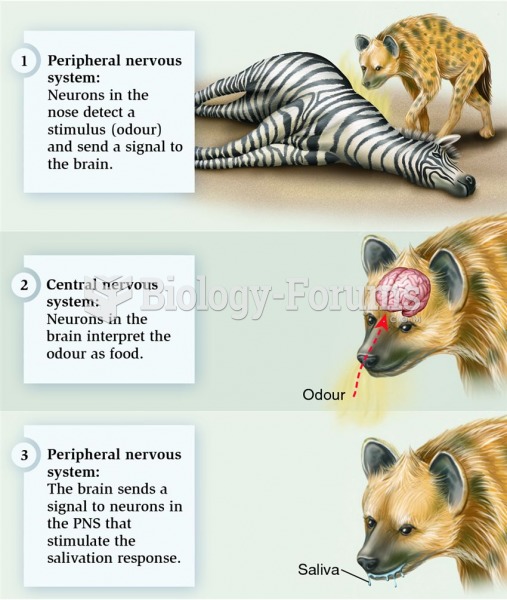 Roles of the central and peripheral nervous systems.
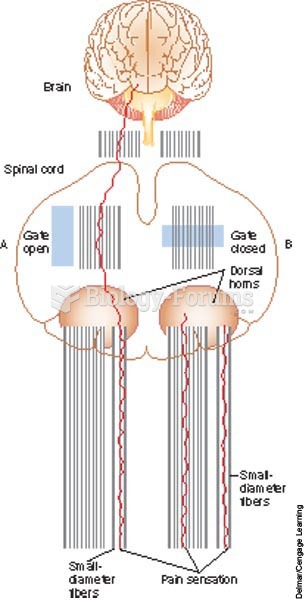 Gate Control Theory, Gate control, Open gate, Closed gate, Pain, Nerve transmission of pain, Pain ma
 Modern Systems Analysis and Design (4th Edition)
 Modern Cell Theory
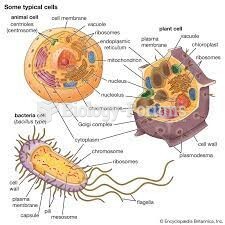 IMAGES THAT DESCRIBE CELLULAR PARTS
 Comparing root systems