The paradox of value refers to the fact that
A) different consumers value the same items differently.
B) the value of a good depends on its total utility.
C) water costs little, while diamonds cost a lot.
D) water brings little consumer surplus.
Question 2
Over the past decade, the incomes of the top 1 percent have increased disproportionately higher than that of the middle class. These changes mean that the Lorenz curve moved ________ the 45 degree line and the Gini ratio has ________.
A) closer to; decreased
B) closer to; increased
C) further away from; decreased
D) further away from; increased


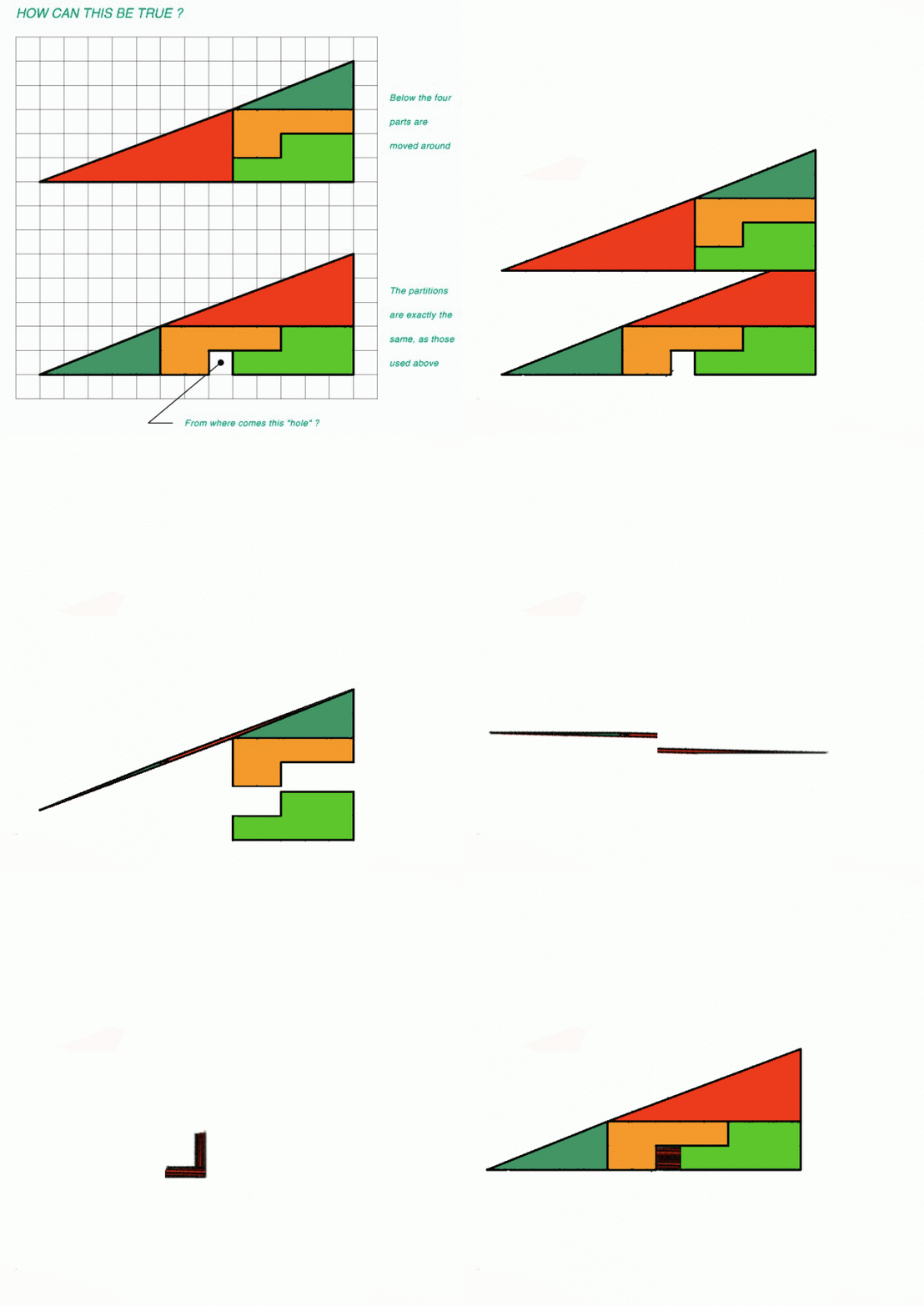 Curry's paradox
 Items that would be difficult to replace bearing legal significance are sent by certified mail.
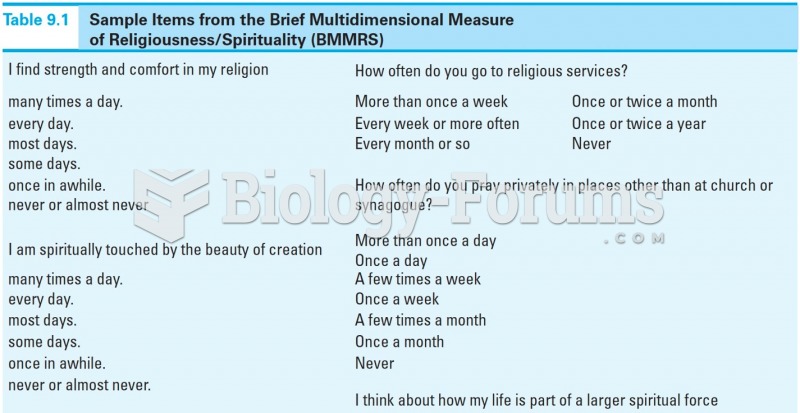 Sample Items from the Brief Multidimensional Measure of Religiousness/Spirituality (BMMRS)
 The Nutrient Fact Panel on the food label can help consumers make smart nutrition choices
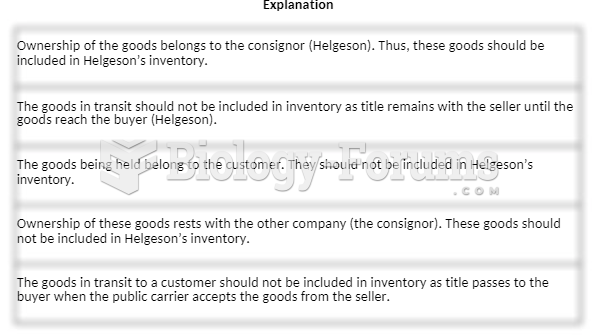 Helgeson Company has identified the following items for possible inclusion when taking a ...
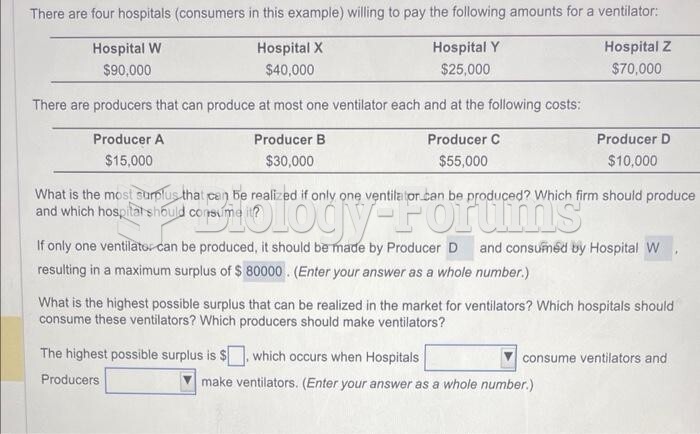 There are four hospitals (consumers in this example) willing to pay the following amounts for a ...