This topic contains a solution. Click here to go to the answer

Author Question: Less magnification of the sesamoids can be achieved by positioning the foot: dorsiflexed with the ... (Read 55 times)

Alygatorr01285

  • Hero Member
  • *****
  • Posts: 564
Less magnification of the sesamoids can be achieved by positioning the foot:
 
 dorsiflexed with the heel in contact with the image receptor
  dorsiflexed with the toes in contact with the image receptor
  plantarflexed with the toes in contact with the image receptor
  plantarflexed with the heel in contact with the image receptor

Question 2

A patient in the emergency room following an MVA is suspected to have a right hemothorax. What technical adjustments would be necessary to image this patient?
 
 no technical adjustments necessary
  increase technical factors
  decrease technical factors
  decrease mAs


Related Topics

Need homework help now?

Ask unlimited questions for free

Ask a Question
Marked as best answer by a Subject Expert

Anonymous

  • Sr. Member
  • ****
  • Posts: 317
Answer to Question 1

dorsiflexed with the toes in contact with the image receptor

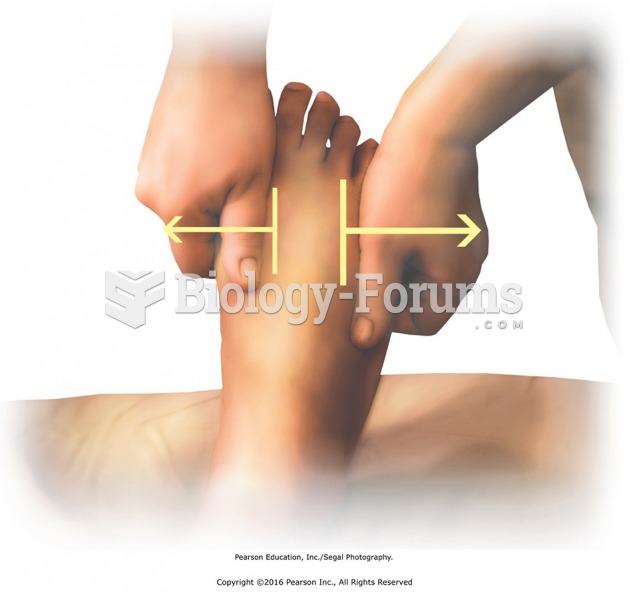
Rationale: Dorsiflexion of the foot is necessary and the ball of the foot should be positioned perpendicular to the image receptor to allow the tangential beam to skim the part. The toes should be positioned closer to the image receptor to reduce magnification.

Answer to Question 2

increase technical factors

Rationale: A hemothorax is blood pooling in the pleural cavity creating an additive pathology. With additive pathologies, the technical factors may need to be increased.


Alygatorr01285

  • Member
  • Posts: 564
Reply 2 on: Jul 17, 2018
Great answer, keep it coming :)


nguyenhoanhat

  • Member
  • Posts: 332
Reply 3 on: Yesterday
Wow, this really help


Did you know?

In the United States, an estimated 50 million unnecessary antibiotics are prescribed for viral respiratory infections.

Did you know?

To combat osteoporosis, changes in lifestyle and diet are recommended. At-risk patients should include 1,200 to 1,500 mg of calcium daily either via dietary means or with supplements.

Did you know?

Certain rare plants containing cyanide include apricot pits and a type of potato called cassava. Fortunately, only chronic or massive ingestion of any of these plants can lead to serious poisoning.

Did you know?

No drugs are available to relieve parathyroid disease. Parathyroid disease is caused by a parathyroid tumor, and it needs to be removed by surgery.

Did you know?

Normal urine is sterile. It contains fluids, salts, and waste products. It is free of bacteria, viruses, and fungi.

For a complete list of videos, visit our video library