Answer to Question 1
D
Feedback:
Unintentional injuries are the leading causes of death in adolescents (U.S. Department of Health and Human Services, Health Resources and Services Administration, Maternal and Child Health Bureau, 2008). Injuries kill more adolescents than all diseases combined, with 46 of injury-related deaths due to motor vehicle accidents (U.S. Department of Health and Human Services, 2007). Unintentional injury accounts for about 48 of adolescent injury deaths, violence and homicide for 15.2, and suicide for 11.8 of adolescent injury deaths (U.S. Department of Health and Human Services, 2007). Males are more likely than females to die of any type of injury.
Answer to Question 2
A, B, D, E
Feedback:
Guidelines to avoid secondary smoke include frequenting smoke-free establishments, declaring the home and car smoke-free zones, asking individuals who smoke to smoke out of doors, and encouraging family and friends to begin quit-smoking programs. Spraying air freshener in the room after smoking will not reduce the child's exposure to secondary smoke.


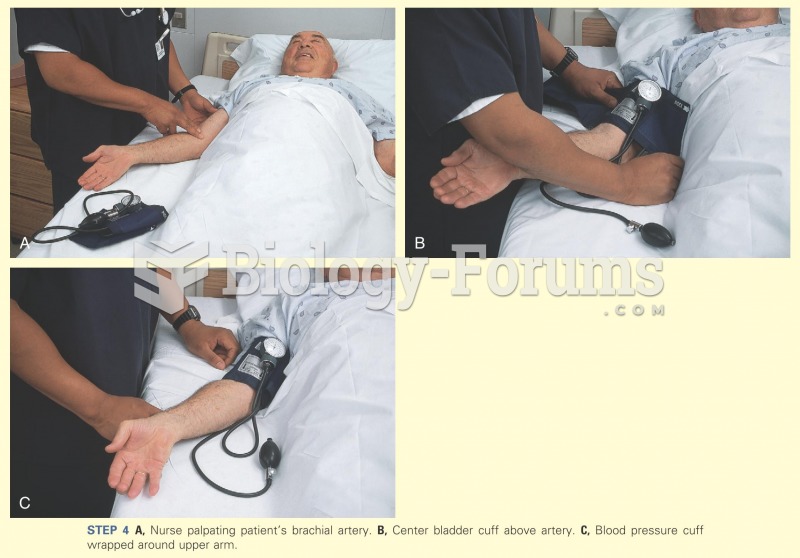 Nurse palpating the patient's brachial artery
 Shortly after his death, George Washington had already become myth—part Moses, part angel—in this wo
 In 2006 an Iraqi tribunal convicted Saddam Hussein of murdering his own people and sentenced him to
 Nurse administering enteral nutrition through a feeding tube.
 Teaching women about the safety of drug use during pregnancy is an essential component of nursing ...
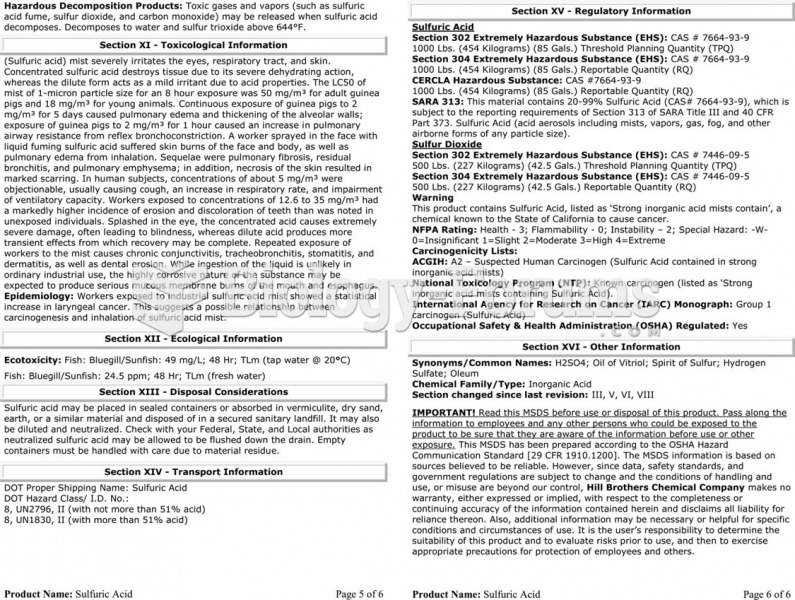 The material safety data sheet (MSDS) for sulfuric acid showing the detailed technical information ...