Author Question: Compared to non-human animals, humans are most notably ____. a. more likely to help kin b. more ... (Read 120 times)

jlmhmf

  • Hero Member
  • *****
  • Posts: 552
Compared to non-human animals, humans are most notably ____.
 
  a. more likely to help kin
  b. more likely to help non-kin
  c. less likely to help kin
  d. less likely to help non-kin

Question 2

Research on inoculation against the stereotype threat was conducted on ____.
 
  a. African Americans
  b. women
  c. older adults
  d. homosexuals


izzat

  • Sr. Member
  • ****
  • Posts: 328
Answer to Question 1

B

Answer to Question 2

C


Related Topics

Need homework help now?

Ask unlimited questions for free

Ask a Question


Did you know?

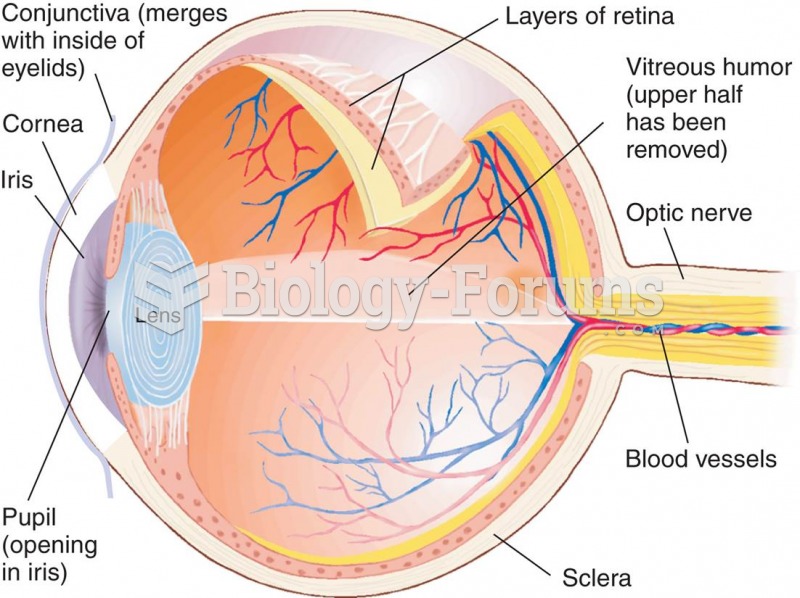
Astigmatism is the most common vision problem. It may accompany nearsightedness or farsightedness. It is usually caused by an irregularly shaped cornea, but sometimes it is the result of an irregularly shaped lens. Either type can be corrected by eyeglasses, contact lenses, or refractive surgery.

Did you know?

The Romans did not use numerals to indicate fractions but instead used words to indicate parts of a whole.

Did you know?

For about 100 years, scientists thought that peptic ulcers were caused by stress, spicy food, and alcohol. Later, researchers added stomach acid to the list of causes and began treating ulcers with antacids. Now it is known that peptic ulcers are predominantly caused by Helicobacter pylori, a spiral-shaped bacterium that normally exist in the stomach.

Did you know?

Drugs are in development that may cure asthma and hay fever once and for all. They target leukotrienes, which are known to cause tightening of the air passages in the lungs and increase mucus productions in nasal passages.

Did you know?

The cure for trichomoniasis is easy as long as the patient does not drink alcoholic beverages for 24 hours. Just a single dose of medication is needed to rid the body of the disease. However, without proper precautions, an individual may contract the disease repeatedly. In fact, most people develop trichomoniasis again within three months of their last treatment.

For a complete list of videos, visit our video library