Which statement about men who choose nontraditional careers is true?
A) They tend to report a high level of private comfort with their career choice.
B) They are less likely than their female co-workers to move into supervisory positions.
C) Their co-workers often assume that they are less knowledgeable than they actually are.
D) They are less likely than female co-workers to be offered choice job placements.
Question 2
Compared to their traditional-career counterparts, men who choose traditionally female-dominated careers __________.
A) are more focused on the social status of their work
B) are more gender-typed in their personal life
C) are more interested in working with people
D) have more conservative social attitudes


 True-color view of Mars seen through NASA's Hubble Space Telescope in 1999
 Choose the telephone unit that offers the features needed in your office.
 Early-maturing boys tend to be advantaged because they often fit cultural ideals of masculinity.
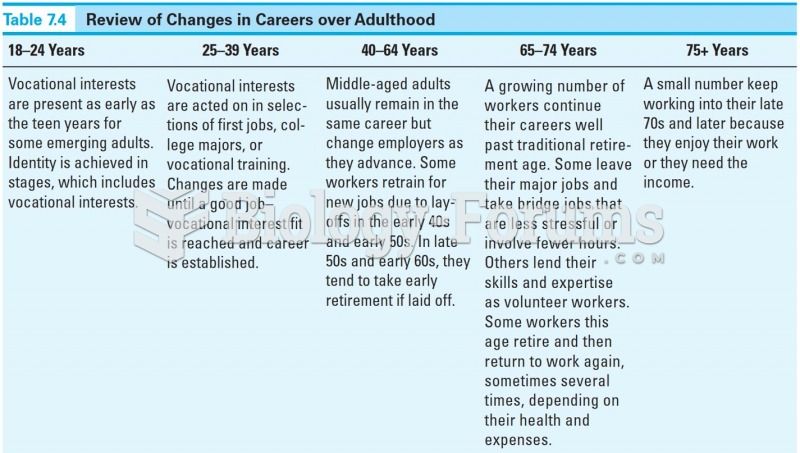 Review of Changes in Careers over Adulthood
 Midsagittal section indicating locations of true and false pelves
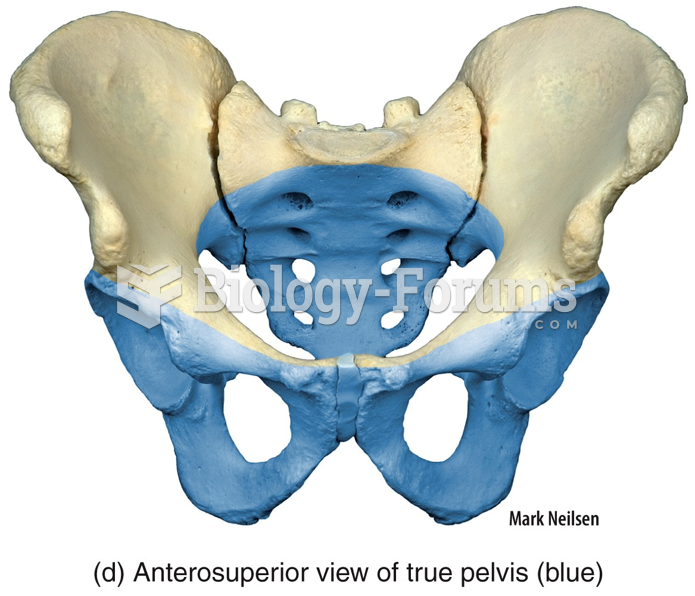 Anterosuperior view of true pelvis (blue)