This topic contains a solution. Click here to go to the answer

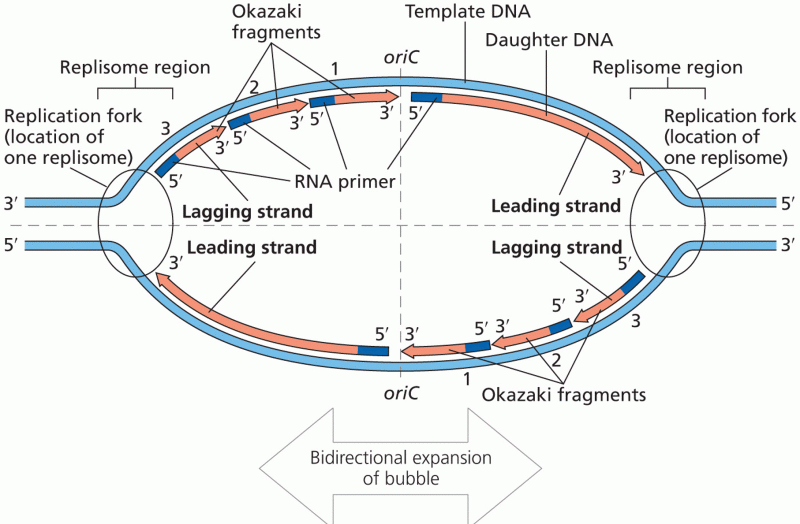
Author Question: In nucleic acid synthesis, which enzyme is responsible for replication of DNA? A) Isomerase B) ... (Read 107 times)

nummyann

  • Hero Member
  • *****
  • Posts: 576
In nucleic acid synthesis, which enzyme is responsible for replication of DNA?
 
  A) Isomerase B) DNA ligase
  C) DNA polymerase D) Restriction endonucleases

Question 2

Which of the following organisms is most commonly associated with ventilator-associated pneumonia?
 
  A) Pseudomonas aeruginosa B) Haemophilus influenzae
  C) Streptococcus pneumoniae D) Klebsiella pneumoniae


Related Topics

Need homework help now?

Ask unlimited questions for free

Ask a Question
Marked as best answer by a Subject Expert

diana chang

  • Sr. Member
  • ****
  • Posts: 288
Answer to Question 1

C

Answer to Question 2

A


nummyann

  • Member
  • Posts: 576
Reply 2 on: Jun 25, 2018
YES! Correct, THANKS for helping me on my review


meow1234

  • Member
  • Posts: 333
Reply 3 on: Yesterday
Gracias!


Did you know?

Every 10 seconds, a person in the United States goes to the emergency room complaining of head pain. About 1.2 million visits are for acute migraine attacks.

Did you know?

Children with strabismus (crossed eyes) can be treated. They are not able to outgrow this condition on their own, but with help, it can be more easily corrected at a younger age. It is important for infants to have eye examinations as early as possible in their development and then another at age 2 years.

Did you know?

Cocaine was isolated in 1860 and first used as a local anesthetic in 1884. Its first clinical use was by Sigmund Freud to wean a patient from morphine addiction. The fictional character Sherlock Holmes was supposed to be addicted to cocaine by injection.

Did you know?

Anesthesia awareness is a potentially disturbing adverse effect wherein patients who have been paralyzed with muscle relaxants may awaken. They may be aware of their surroundings but unable to communicate or move. Neurologic monitoring equipment that helps to more closely check the patient's anesthesia stages is now available to avoid the occurrence of anesthesia awareness.

Did you know?

The toxic levels for lithium carbonate are close to the therapeutic levels. Signs of toxicity include fine hand tremor, polyuria, mild thirst, nausea, general discomfort, diarrhea, vomiting, drowsiness, muscular weakness, lack of coordination, ataxia, giddiness, tinnitus, and blurred vision.

For a complete list of videos, visit our video library