This topic contains a solution. Click here to go to the answer

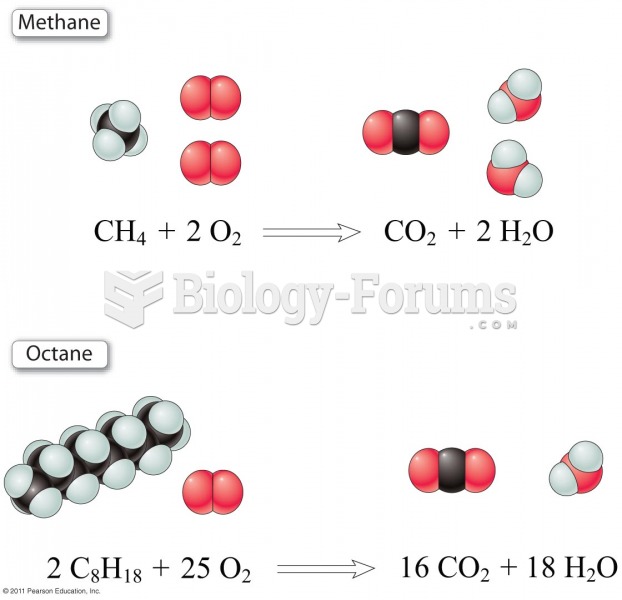
Author Question: Which of the following is the simplest possible hydrocarbon? A) CH4 B) H2 C) HC=CH D) H2C=CH2 ... (Read 124 times)

jhjkgdfhk

  • Hero Member
  • *****
  • Posts: 569
Which of the following is the simplest possible hydrocarbon?
 
  A) CH4
  B) H2
  C) HC=CH
  D) H2C=CH2
  E) C2H6

Question 2

What is a hydrocarbon?
 
  A) It is a molecule composed of carbon and hydrogen only.
  B) It is a wet carbon atom.
  C) It is any organic molecule.
  D) It is a molecule derived from hydrogen synthesis.
  E) none of the above


Related Topics

Need homework help now?

Ask unlimited questions for free

Ask a Question
Marked as best answer by a Subject Expert

mirabriestensky

  • Sr. Member
  • ****
  • Posts: 325
Answer to Question 1

Answer: A

Answer to Question 2

Answer: A


jhjkgdfhk

  • Member
  • Posts: 569
Reply 2 on: Jul 29, 2018
Gracias!


chereeb

  • Member
  • Posts: 326
Reply 3 on: Yesterday
Great answer, keep it coming :)


Did you know?

In 1835 it was discovered that a disease of silkworms known as muscardine could be transferred from one silkworm to another, and was caused by a fungus.

Did you know?

In 2006, a generic antinausea drug named ondansetron was approved. It is used to stop nausea and vomiting associated with surgery, chemotherapy, and radiation therapy.

Did you know?

Asthma occurs in one in 11 children and in one in 12 adults. African Americans and Latinos have a higher risk for developing asthma than other groups.

Did you know?

Certain topical medications such as clotrimazole and betamethasone are not approved for use in children younger than 12 years of age. They must be used very cautiously, as directed by a doctor, to treat any child. Children have a much greater response to topical steroid medications.

Did you know?

For high blood pressure (hypertension), a new class of drug, called a vasopeptidase blocker (inhibitor), has been developed. It decreases blood pressure by simultaneously dilating the peripheral arteries and increasing the body's loss of salt.

For a complete list of videos, visit our video library