Which of the following is a drawback of a structured interview?
a. Important information is asked about in the same way.
b. Information from one is hard to compare to information from another.
c. Interviews may include questions about areas that are of no concern to the patient.
d. Each person who uses interviews, uses them in different ways.
Question 2
If the score on one variable is high and the score on another variable is low, this is known as a __________ correlation.
Fill in the blanks with correct word


 It's important to take all your antibiotics
 Terry Winters, Color and Information.
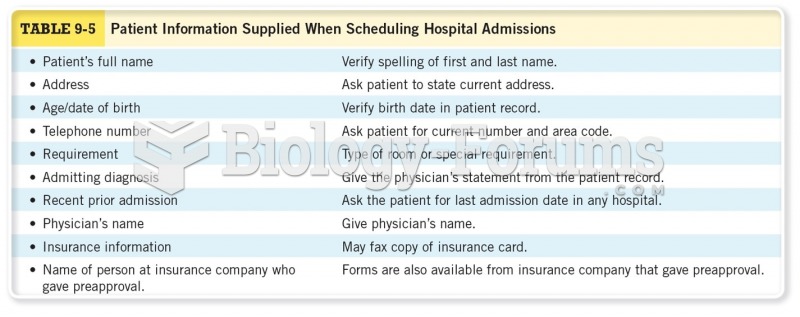 Patient Information Supplied When Scheduling Hospital Admissions
 It is important for new employees to know the location of all fire extinguishers. (B) Aim low toward ...
 Hydrolysis reactions for some biochemically important phosphate compounds (part 1)
 Structures of other important isoprenoids