Answer to Question 1
Early maturing boys tend to be more popular than late-maturing boys. They are more poised, relaxed, and good-natured. They have an edge in sports. But for boys, early maturation is often associated with greater risks of aggression and delinquency and abuse of alcohol and other drugs. Sexual opportunities may create demands that they don't know how to respond to. Early maturing boys have higher self-esteem than late-maturing boys. On the other hand, early-maturing girls may feel awkward and have less self-esteem. Boys may tease them. Tall girls of dating age find that shorter boys are reluctant to approach them. Early-maturing girls are at greater risk for many psychological problems, including substance abuse. Many girls who mature early obtain lower grades in school and engage in sexual activity earlier. Parents of early-maturing girls may increase their vigilance and restrictiveness, leading to additional child-parent conflict.
Answer to Question 2
F


 Ancestral versus shared derived characters involving morphological traits.
 Cold versus the Flu
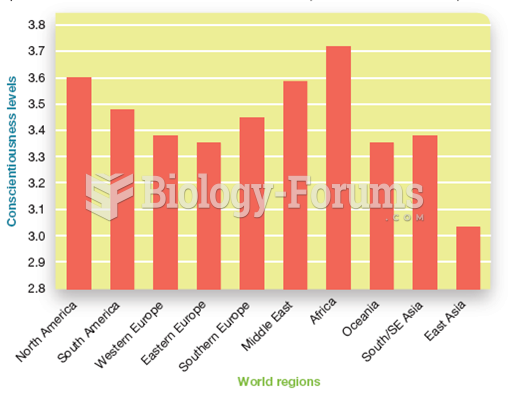 Cultural Differences in Levels of Conscientiousness
 Rooted tree versus unrooted tree
 Identifying ancestral versus derived alleles
 Complete versus incomplete genetic linkage