Standard residuals are ________.
A) residuals minus the outlier values
B) the sum of squared residuals
C) residuals subtracted from their mean
D) residuals divided by their standard deviation
Question 2
The sampling distribution of the Kruskal-Wallis test statistic is well approximated by the:
A) normal distribution.
B) chi-square distribution with k - 1 degrees of freedom, where k is the number of populations.
C) F- distribution with 1 and k - 1 degrees of freedom, where k is the number of Populations.
D) Student's t distribution with n - 1 degrees of freedom.


 In 2008, the U.S. economy suffered a gaping wound as several trillion dollars were ripped out of it.
 Using the cursors on the oscilloscope, the high- and low-oxygen sensor values can be displayed on ...
 How to solve an exponential problem using a table of values (Question 2)
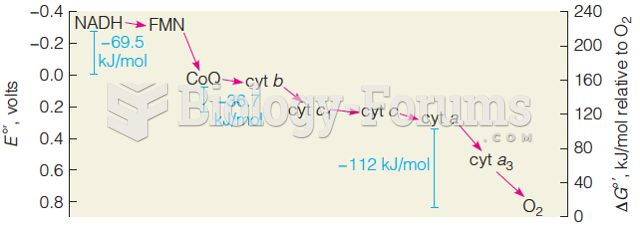 Standard reduction potentials of the major respiratory electron carriers
 How to fully analyze the standard and factored form of a quadratic equation (Question 1)
 How to quickly find the vertex of a quadratic equation that is in standard form