An 89-year-old female is experiencing signs and symptoms of a urinary tract infection. She had submitted a previous voided urine specimen but it was heavily contaminated with normal urethral flora.
Which of the following procedures would be the least invasive but provide a clean urine specimen?
A) Suprapubic aspiration B) In and out catheterization
C) Indwelling catheter D) Cystoscopy
Question 2
A voided urine collected in a physician's office is delivered to the Microbiology department on Monday at 9:00 a.m. The collection date and time is recorded as Friday 4:20 p.m. You call the physician's office to verify.
Her nurse verifies the collection date and time as correct. She explains the specimen was missed by the courier on Friday but she refrigerated it until the next scheduled pickup on Monday morning. You will
A) add a phenylethyl alcohol agar in addition to the routine media.
B) request a recollect.
C) process the specimen as received.
D) centrifuge the specimen and process it.


 The Redhead - female with ducklings
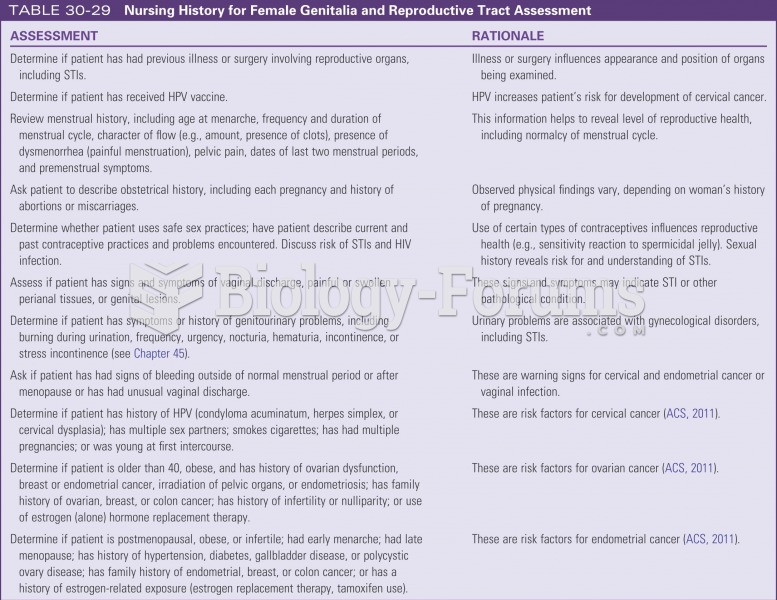 Nursing history for female genetalia and reproductive tract assessment
 Hormonal control over male and female reproductive hormones.
 Sample budget spreadsheet form for first year of business.
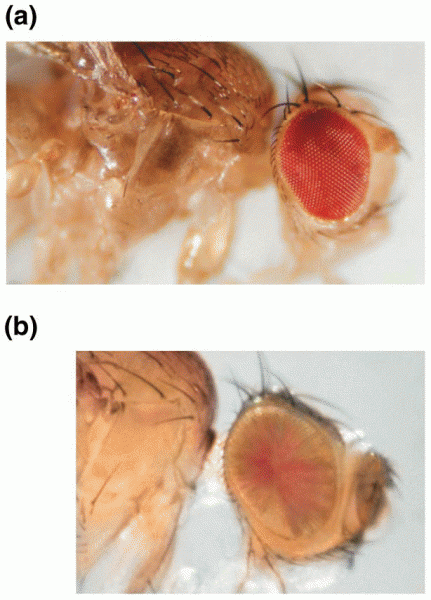 Position effect, as illustrated in the eye phenotype in two female Drosophila