Author Question: Preoperative office appointments are typically set up by the A) physician. B) office manager. C) ... (Read 215 times)

K@

  • Hero Member
  • *****
  • Posts: 608
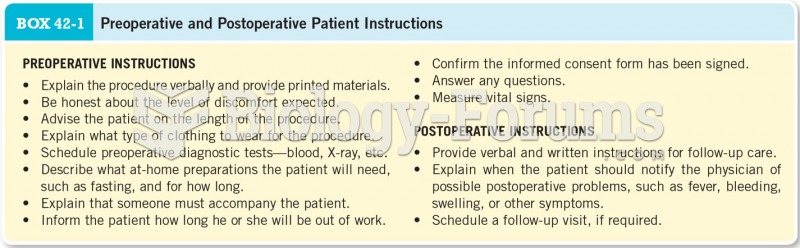
Preoperative office appointments are typically set up by the
 A) physician.
  B) office manager.
  C) hospital scheduling clerk.
  D) medical assistant.

Question 2

The petty cash fund should be used for all office purchases, regardless of the size of the purchase.
 
 Indicate whether the statement is true or false


Melissahxx

  • Sr. Member
  • ****
  • Posts: 304
Answer to Question 1

D

Answer to Question 2

False


Related Topics

Need homework help now?

Ask unlimited questions for free

Ask a Question
 

Did you know?

Dogs have been used in studies to detect various cancers in human subjects. They have been trained to sniff breath samples from humans that were collected by having them breathe into special tubes. These people included 55 lung cancer patients, 31 breast cancer patients, and 83 cancer-free patients. The dogs detected 54 of the 55 lung cancer patients as having cancer, detected 28 of the 31 breast cancer patients, and gave only three false-positive results (detecting cancer in people who didn't have it).

Did you know?

In 2012, nearly 24 milliion Americans, aged 12 and older, had abused an illicit drug, according to the National Institute on Drug Abuse (NIDA).

Did you know?

Fewer than 10% of babies are born on their exact due dates, 50% are born within 1 week of the due date, and 90% are born within 2 weeks of the date.

Did you know?

Each year in the United States, there are approximately six million pregnancies. This means that at any one time, about 4% of women in the United States are pregnant.

Did you know?

For about 100 years, scientists thought that peptic ulcers were caused by stress, spicy food, and alcohol. Later, researchers added stomach acid to the list of causes and began treating ulcers with antacids. Now it is known that peptic ulcers are predominantly caused by Helicobacter pylori, a spiral-shaped bacterium that normally exist in the stomach.

For a complete list of videos, visit our video library