Nonsampling errors
a. are as identifiable as sampling errors.
b. decrease with sample size.
c. may increase with sample size.
d. are quite uncommon.
e. have minimal impact on overall survey error.
Question 2
Which of the following is TRUE?
a. Noncoverage, nonsampling error is best treated by increasing the sample size that is selected.
b. Noncoverage, nonsampling error is essentially a sampling frame problem and if clear, complete, up to date sampling frames exist, noncoverage is not likely to be a problem.
c. While noncoverage can be a source of bias, overcoverage is not. In fact, overcoverage may improve estimates as it means that the sample size is larger than initially planned at no increase in cost.
d. Noncoverage bias is essentially eliminated with quota samples.
e. Noncoverage error can be statistically estimated.


 Interaction web of factors that might influence locust population size.
 Rhytidoplasty. This is a common form of plastic surgery in which the skin is pulled and sutured to d
 The effective temperature, or black body temperature, of the Sun (5777 K) is the temperature a black
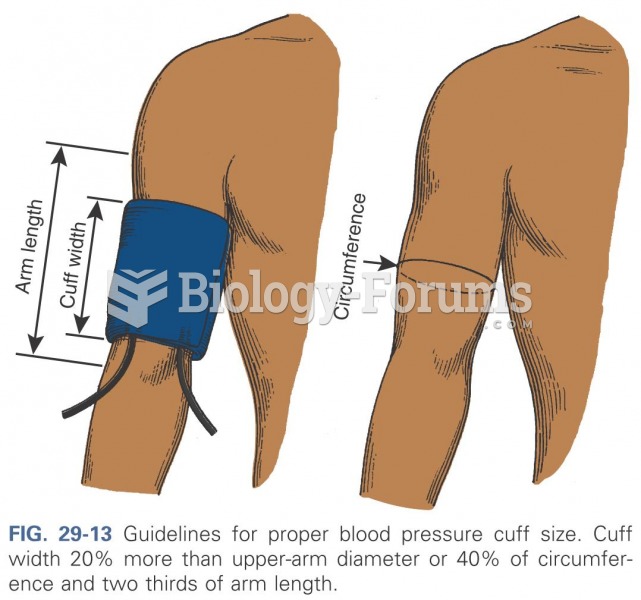 Guidelines for proper blood pressure cuff size
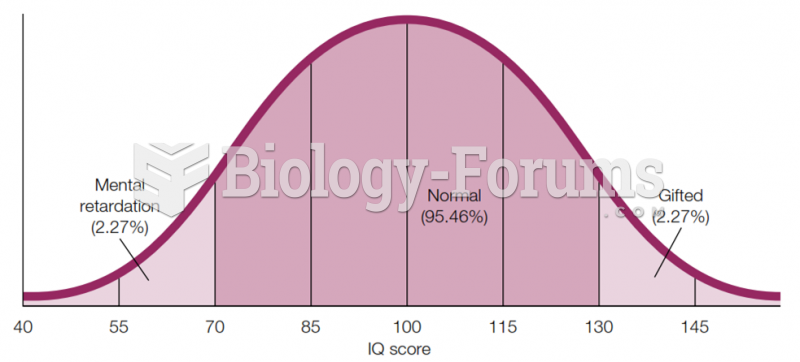 Bell Curve for Intelligence IQ scores for a population-based sample usually fall into this kind of
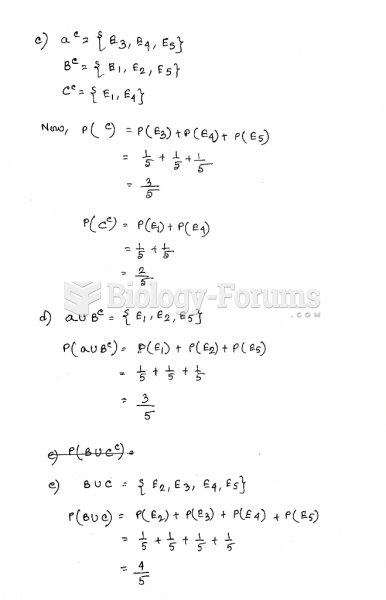 Suppose that we have a sample space with five equally likely experimental outcomes: E1, E2, E3, ...