Answer to Question 1
A point on the production possibilities curve is efficient because it means the economy is producing the maximum outputs of goods and services with given resources and technology. By contrast, a point below the production possibility curve means that the use of the given resources is not generating the maximum possible outputs of goods and services. Thus, this point represents an inefficient combination of outputs produced with available resources and technology.
Answer to Question 2
B


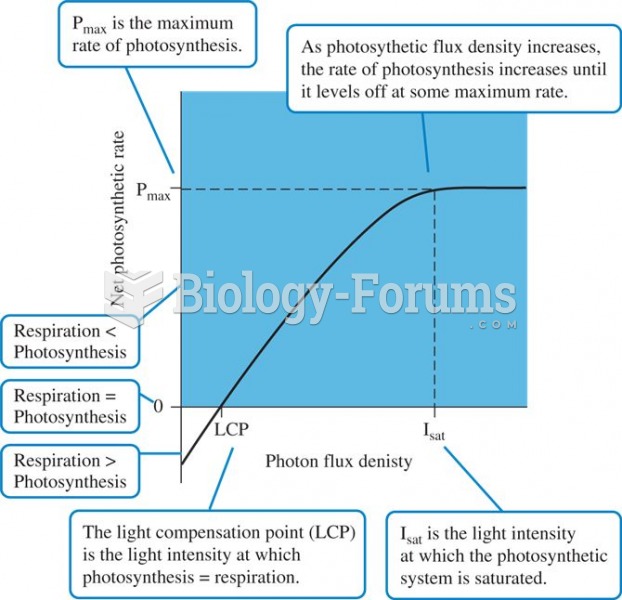 A theoretical photosynthetic response curve.
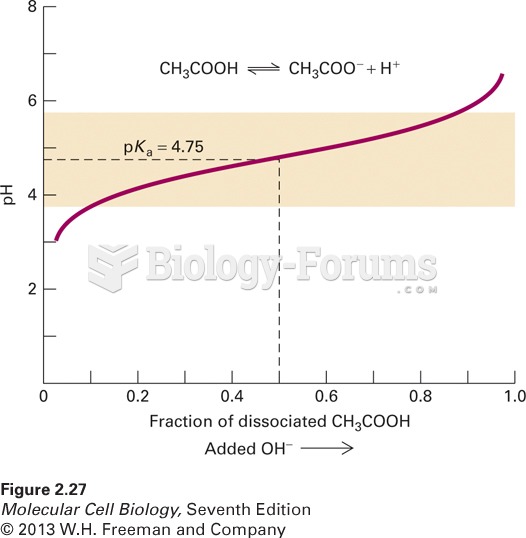 The titration curve of the buffer acetic acid (CH3COOH)
 Stressing that education reproduces a country’s social class system, conflict theorists point out ...
 A point-type ignition system showing the distributor cam which opens the points
 How to find the equation of a line that is perpendicular to a line passing through a point
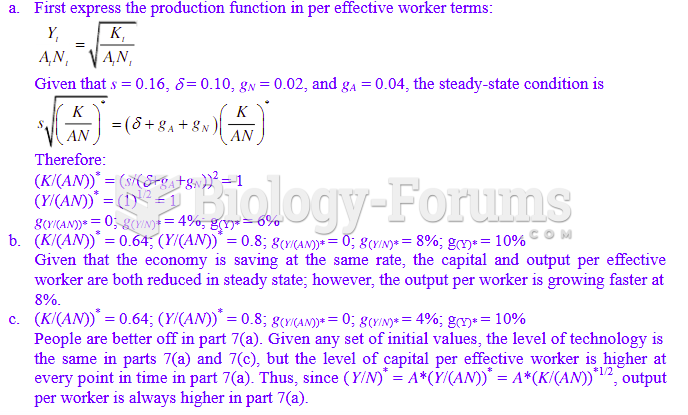 Consider the production function ( ) 0.5 0.5 Y = AK L . Suppose both saving rate (s) and the ...