The U.S. government, like many governments throughout the world, bailed out large financial institutions that were thought to be too big to fail during the 2008 financial crisis.
Some critics of the bailouts argued that these policies created a moral hazard problem; banks would undertake too many risky projects if they knew that the government would bail them out if the project failed. This question explores this moral hazard problem. a. Suppose a bank has the opportunity to invest in a risky project. If the project is successful, the bank will earn 80; if it is unsuccessful, the bank will lose 100 . The probability that the project will be successful is 0.5 . What is the expected value of investing in this project? If the bank is risk neutral, will the bank make this investment? b. Now suppose the government has a policy that helps banks that are suffering losses. Under this policy, the government will give a bank 30 percent of the bank's losses if a project is unsuccessful. Thus, if the project in this problem is unsuccessful, the government will give the bank 0.30 x 100, or 30 . What is the expected value of investing in this project? If the bank is risk neutral, will the bank make this investment?
Question 2
If in the market for peaches the supply curve has shifted to the left
A) the quantity of peaches supplied has decreased. B) the quantity of peaches supplied has increased.
C) the supply of peaches has increased. D) the supply of peaches has decreased.


 Large numbers of plant species can flower at once in this grassland in Kinsella, Alberta.
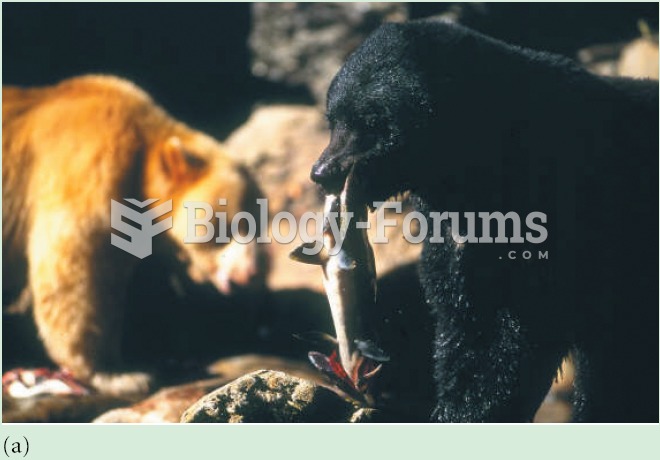 (a) Feeding by bear on salmon results in large allochthonous inputs of nutrients into (b) the forest
 Pekingese's large eyes
 Rusty-tipped Page (Siproeta epaphus), Butterfly World (Florida)
 The world attempted to deal with Somalia as if it were a real country but painfully learned that Som