Suppose a previously competitive labor market turns into a monopsony. The labor supply curve faced by the new monopsonist is:
a. above the labor supply curve under perfect competition.
b. the market supply curve of labor.
c. below the labor supply curve under perfect competition.
d. changed because workers are now more willing to supply labor.
e. perfectly horizontal.
Question 2
Which of the following is a difference between the theories of John Maynard Keynes and the classical economists?
a. Unlike Keynesian economists, classical economists believed that unemployment was a serious long-term problem.
b. Unlike Keynesian economists, classical economists advocated that the economy was always in equilibrium.
c. Unlike Keynesian economists, classical economists believed that the economy would always settle at full employment.
d. Unlike Keynesian economists, classical economists did not believe that the economy was always in equilibrium.
e. Unlike Keynesian economists, classical economists believed a glut created an unemployment problem for the economy.


 The reflection nebula NGC 1999 is brilliantly illuminated by V380 Orionis (center), a variable star
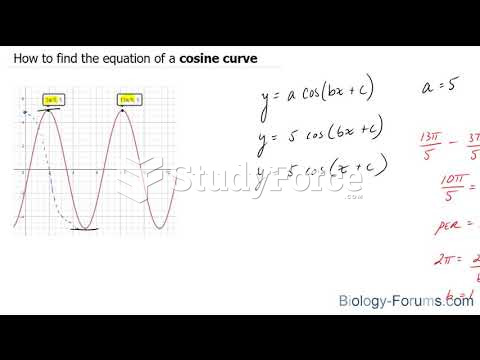 How to find the equation of a cosine curve
 North Korea: Labor Issues
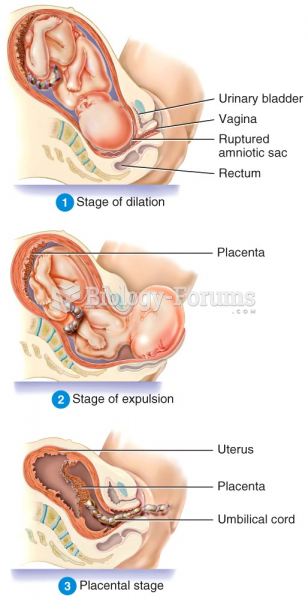 Labor
Labor
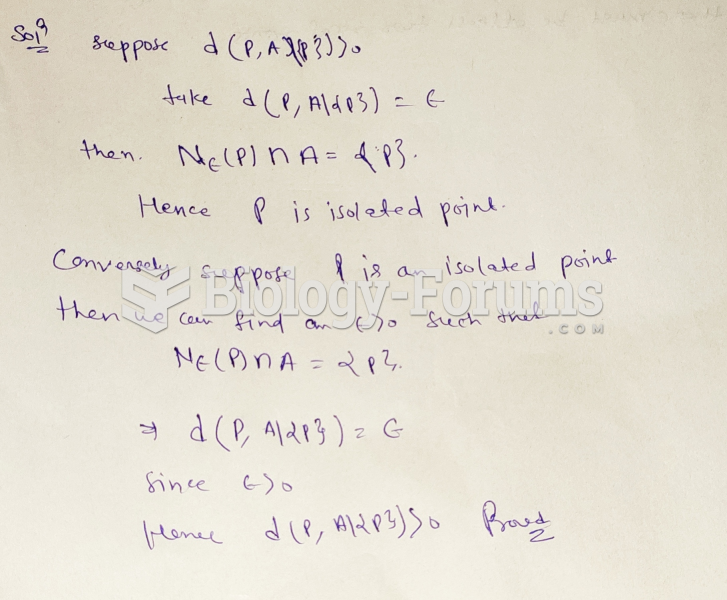 Let A ⊆ R and p ∈ A. Suppose A\{p}6= ∅. Prove that p is an isolated point of A if and ...
 Construct a Lorenz curve that shows income distribution in this society.