Answer to Question 1
Even government websites in many countries fall very short, so the disabled have trouble obtaining critical services. In the European Union, despite laws that require accessibility features, only a third of government websites are fully accessible.
Some web developers are concerned that there is a conflict between usability and accessibility, and that an accessible website will have to bypass many of the rich features and graphical elements that make them pleasing and attention-getting.
Although the challenge of creating accessible websites is not trivial, organizations can make tremendous progress by building in accessibility from the start. A common obstacle for visually impaired people, for instance, is a button that can only be accessed with the mouse. One university's new virtual student union had that flaw on its Let's get started button, so blind students couldn't ever get started. But it is just as easy to program the button to also respond to a key press, if the designers keep that feature in mind.
Though many organizations see efforts to improve accessibility for people with disabilities as additional costs, others are learning that accessibility adds strategic benefits in the form of heightened corporate social responsibility and Internet visibility. Making the site more accessible from the beginning also broadens the potential base of customers and thus makes good business sense.
Answer to Question 2
E


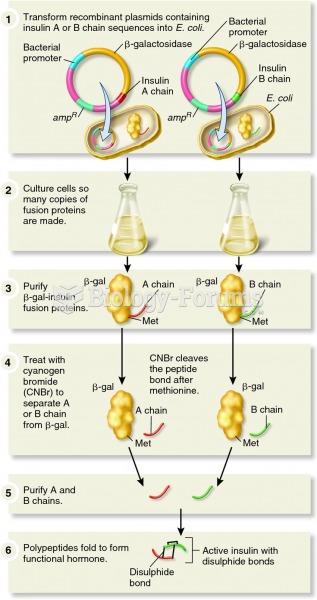 The use of bacteria to make human insulin
 Creede, Colorado, circa 1890, a rough silver mining town that grew from 660 people in 1889 to over 1
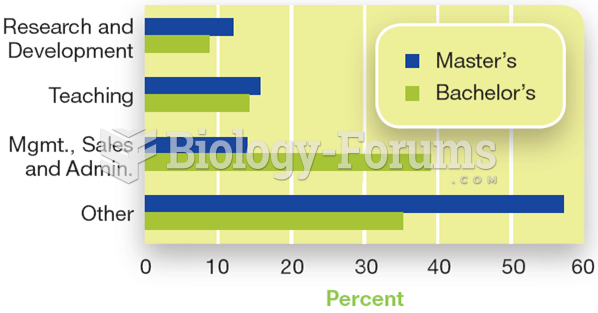 Work Settings for People Earning Master’s and Bachelor’s Degrees in Psychology
 April Greiman, Does It Make Sense?
 A food diary can help patients identify unhealthy eating habits and make healthy choices.
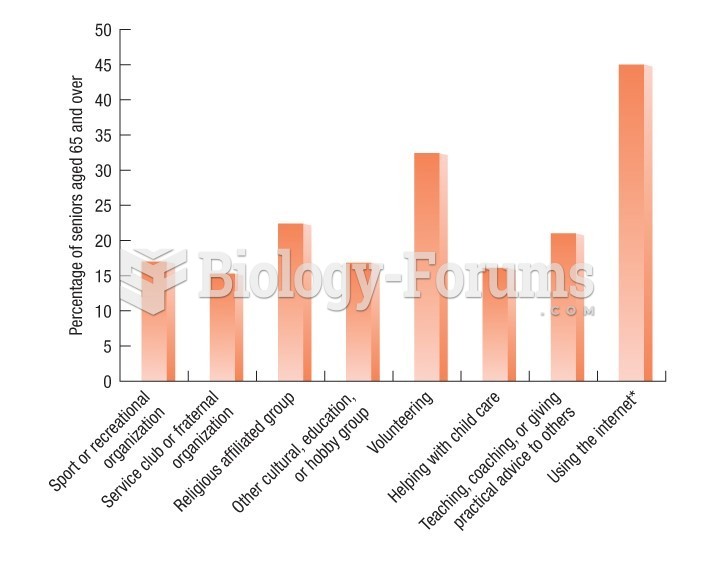 Social and leisure organizations VS. activities by Canadians age 65 and older.