Answer to Question 1
A, B, C
Feedback:
There is no consensus on whether integrations should include the grey literaturei.e., unpublished reports; in quantitative studies, a concern is that there is a bias against the null hypothesis, a publication bias stemming from the underrepresentation of nonsignificant findings in the published reports. On the other hand, some people avoid the grey literature and restrict their sample to reports in peer-reviewed journals, arguing that the peer review system is an important, tried-and-true screen for findings worthy of consideration as evidence.
Answer to Question 2
B


 Blue (grey) and white bicolor cat
 A goanna at Grey Gum picnic area at Mount Coot-tha, Queensland, Australia
 Raphael, Studies for The Alba Madonna (verso).
 Moderate to high physical activity in PE classes is one component of a successful prevention effort ...
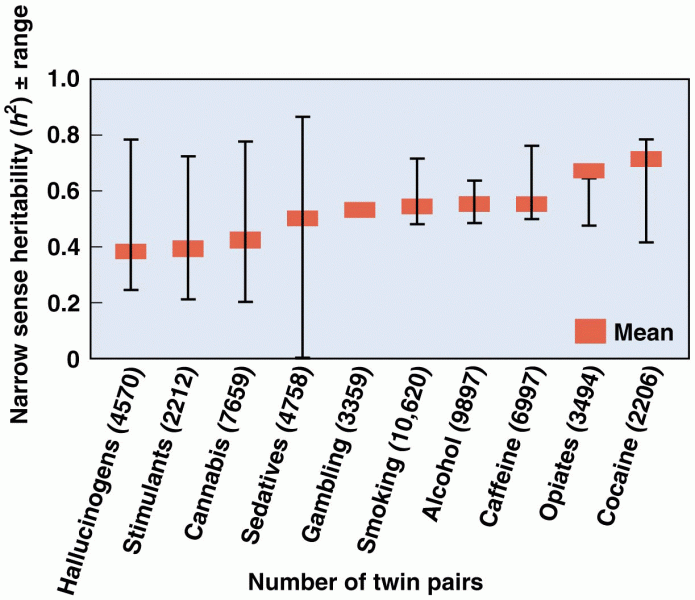 Heritability of several addictive behavioral disorders derived from twin studies
 Mojave Grey - House of the Sun