This topic contains a solution. Click here to go to the answer

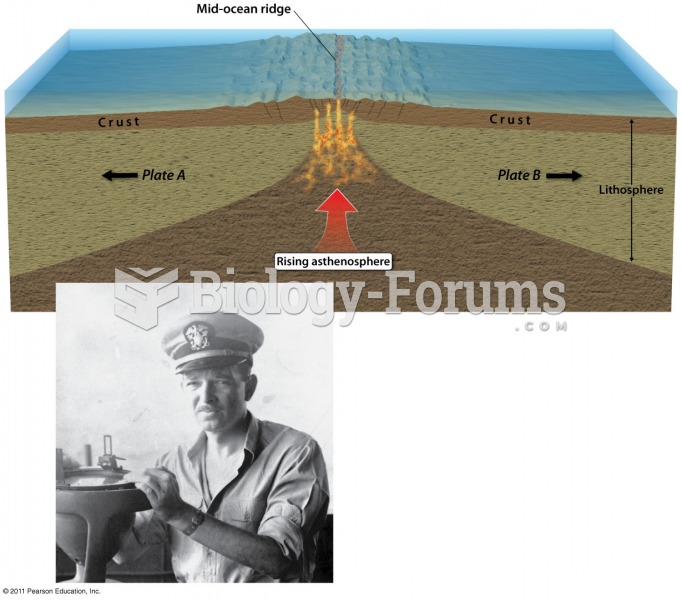
Author Question: Which statement below is true about oceanic crust in comparison to continental crust? a. Oceanic ... (Read 279 times)

EAugust

  • Hero Member
  • *****
  • Posts: 550

Which statement below is true about oceanic crust in comparison to continental crust?
  a. Oceanic crust is thinner and heavier (higher specific gravity).
  b. Oceanic crust is thicker and heavier (higher specific gravity).
  c. Oceanic crust is thinner and lighter (lower specific gravity).
  d. Oceanic crust is thicker and lighter (lower specific gravity).
  e. Oceanic crust is heavier and has about the same thickness


Question 2

What does a Benioff-Wadati zone refer to?
  a. an area of extensional stress
  b. a subduction zone
  c. a transform plate boundary
  d. an area of high heat flow
  e. an area lacking deep earthquakes


Related Topics

Need homework help now?

Ask unlimited questions for free

Ask a Question
Marked as best answer by a Subject Expert

popopong

  • Sr. Member
  • ****
  • Posts: 307
Answer to Question 1

A

Answer to Question 2

B


EAugust

  • Member
  • Posts: 550
Reply 2 on: Jul 15, 2018
Gracias!


xthemafja

  • Member
  • Posts: 348
Reply 3 on: Yesterday
Excellent


Did you know?

In 1864, the first barbiturate (barbituric acid) was synthesized.

Did you know?

Warfarin was developed as a consequence of the study of a strange bleeding disorder that suddenly occurred in cattle on the northern prairies of the United States in the early 1900s.

Did you know?

The word drug comes from the Dutch word droog (meaning "dry"). For centuries, most drugs came from dried plants, hence the name.

Did you know?

The most dangerous mercury compound, dimethyl mercury, is so toxic that even a few microliters spilled on the skin can cause death. Mercury has been shown to accumulate in higher amounts in the following types of fish than other types: swordfish, shark, mackerel, tilefish, crab, and tuna.

Did you know?

Patients who cannot swallow may receive nutrition via a parenteral route—usually, a catheter is inserted through the chest into a large vein going into the heart.

For a complete list of videos, visit our video library