Starting from rest, a car accelerates down a straight road with constant acceleration a for a time t, then the direction of the acceleration is reversed, i.e., it is -a, and the car comes to a stop in an additional time t, the time for the whole trip being 2t. At what time, or times, is the average velocity of the car for the trip equal to its instantaneous velocity during the trip?
a. There is no such time.
b. It is at the halfway point at t.
c. This occurs at 2 times, at 0.5 t and 1.5 t.
d. This occurs at 2 times, at 0.707 t and 1.293 t.
Question 2
Starting from rest, a car accelerates down a straight road with constant acceleration a1 for a time t1, then the acceleration is changed to a different constant value a2 for an additional time t2 . The total elapsed time is t1 + t2 . Can the equations for motion with constant acceleration be used to find the total distance traveled?
a. No, because this is not a case of constant acceleration.
b. Yes, use (a1 + a2)/2 as the average acceleration and the total time in the calculation.
c. Yes, use a1 + a2 as the acceleration and the average time (t1 + t2)/2 in the calculation.
d. Yes, break the problem up into 2 problems, one with the conditions for the first time interval and the other with the conditions for the second time interval, noting that for the second time interval the initial velocity is that from the end of the first time interval. When done, add the distances from each of the time intervals.


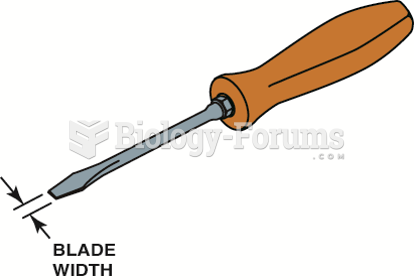 A flat-tip (straight-blade) screwdriver. The width of the blade should match the width of the slot ...
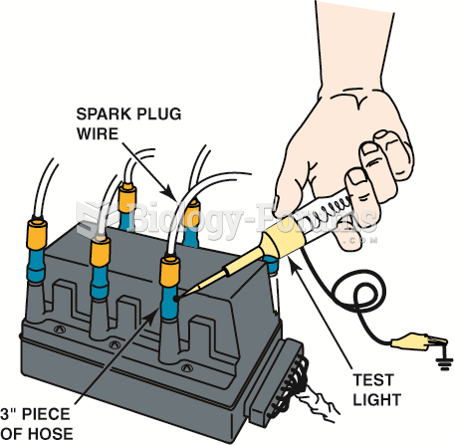 Using a vacuum hose and a grounded test light to ground one cylinder at a time on a DIS. This works ...
 Gliding Phoenix. Beginning position: Legs straight and together, arms at sides of body. 1. Rise up ...
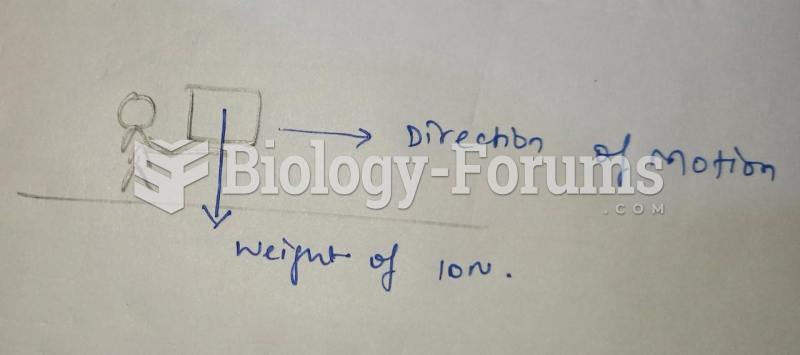 If you walk 5.0 m horizontally forward at a constant velocity carrying a 10 N object, the ...
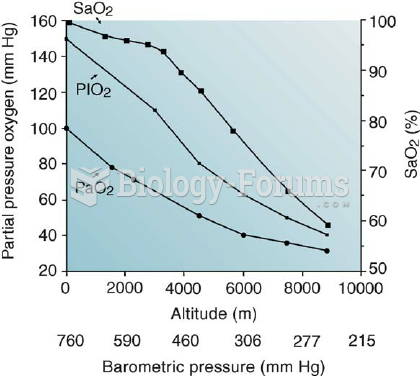 How much atmospheric pressure drop would starting to effect us?
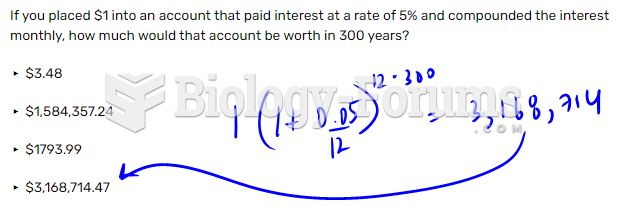 A mother invests $9000 in a bank account at the time of her daughter's birth. The interest is ...