If a point charge is located at the center of a cylinder and the electric flux leaving one end of the cylinder is 20 of the total flux leaving the cylinder, what portion of the flux leaves the curved surface of the cylinder?
A)
20
B)
100
C)
80
D)
40
E)
60
Question 2
A muonic hydrogen atom is a proton orbited by a muon (a particle with the same charge as an electron and 207 times its mass) in which the mass of the muon is significant relative to the mass of the proton.
What would be the radius of the smallest muon orbit in a muonic hydrogen atom?
A) 1.10 10-8 m
B) 1.03 10-8 m
C) 2.84 10-13 m
D) 2.56 10-13 m
E) 5.29 10-11 m


 Although the Democrats and the Republicans represent slightly different slices of the center, those ...
 A typical handheld cylinder leakage tester.
 The engine is rotated until the timing marks again align indicating that the companion cylinder ...
 A typical electric motor-driven AIR pump. This unit is on a Chevrolet Corvette and only works when ...
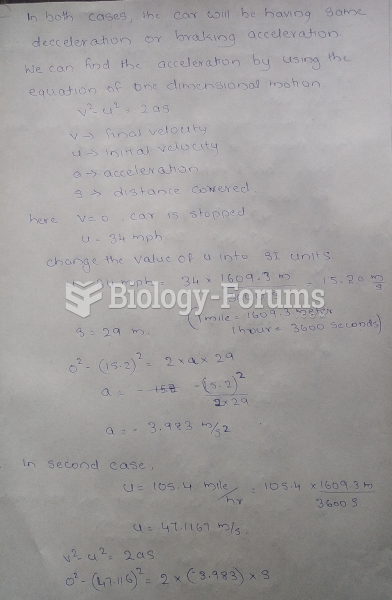 A certain car traveling at 34.0 mph skids to a stop in 29 meters from the point where the ...
 Chloroform has a boiling point of 61.1 degrees C and dichloromethane has a boiling point of 40 ...