This topic contains a solution. Click here to go to the answer

Author Question: Rolling without slipping depends on static friction between the rolling object and the ground. ... (Read 172 times)

Yi-Chen

  • Hero Member
  • *****
  • Posts: 550
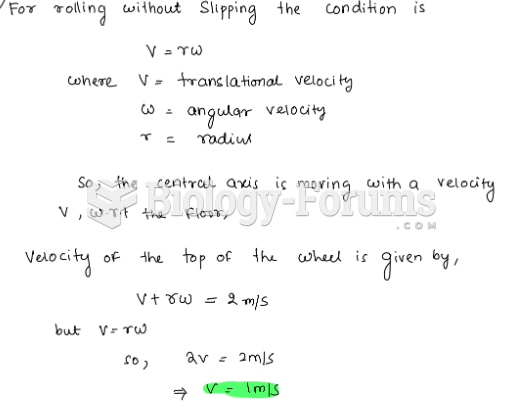
Rolling without slipping depends on static friction between the rolling object and the ground.
 
  Indicate whether the statement is true or false

Question 2

Which one of the following is the correct expression of the cutoff frequency of the metal in terms of its work function?
 
  A) fo = Wo/h
  B) fo = Wo/c
  C) fo = c/Wo
  D) fo = h/Wo
  E) None of the other choices is correct.


Related Topics

Need homework help now?

Ask unlimited questions for free

Ask a Question
Marked as best answer by a Subject Expert

millet

  • Sr. Member
  • ****
  • Posts: 354
Answer to Question 1

TRUE

Answer to Question 2

A


Yi-Chen

  • Member
  • Posts: 550
Reply 2 on: Jul 29, 2018
Thanks for the timely response, appreciate it


jordangronback

  • Member
  • Posts: 339
Reply 3 on: Yesterday
Gracias!


Did you know?

The familiar sounds of your heart are made by the heart's valves as they open and close.

Did you know?

Approximately one in four people diagnosed with diabetes will develop foot problems. Of these, about one-third will require lower extremity amputation.

Did you know?

Barbituric acid, the base material of barbiturates, was first synthesized in 1863 by Adolph von Bayer. His company later went on to synthesize aspirin for the first time, and Bayer aspirin is still a popular brand today.

Did you know?

The cure for trichomoniasis is easy as long as the patient does not drink alcoholic beverages for 24 hours. Just a single dose of medication is needed to rid the body of the disease. However, without proper precautions, an individual may contract the disease repeatedly. In fact, most people develop trichomoniasis again within three months of their last treatment.

Did you know?

More than nineteen million Americans carry the factor V gene that causes blood clots, pulmonary embolism, and heart disease.

For a complete list of videos, visit our video library