
This topic contains a solution. Click here to go to the answer
|
|
|

 Jaundice and Yellow Sclera
 The Head Start program was designed to increase the school readiness of low-income children.
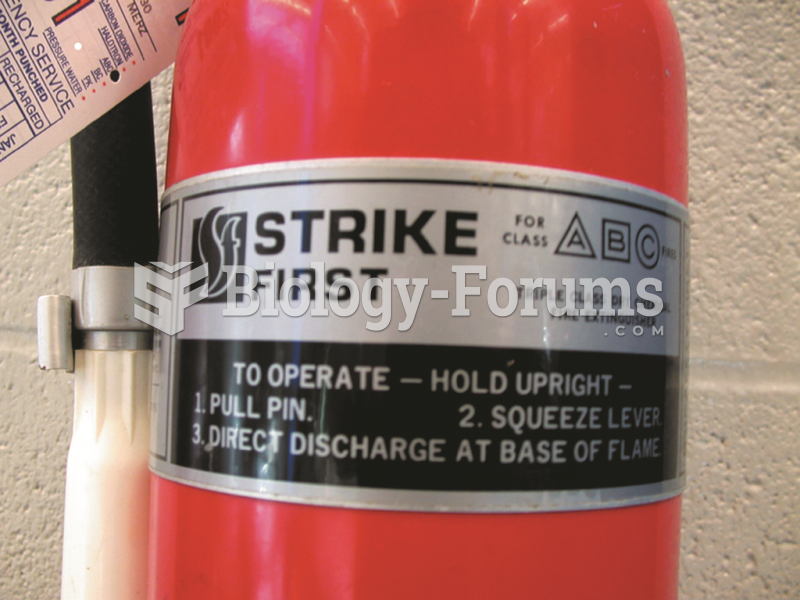 A typical fire extinguisher designed to be used on class A, B, or C fires.
 Hold hand around thumb and little finger and apply broadening strokes across the metacarpals. Press ...
 A box contains red, yellow and green marbles. Half of the marbles are red, 1/8 of the remaining ...
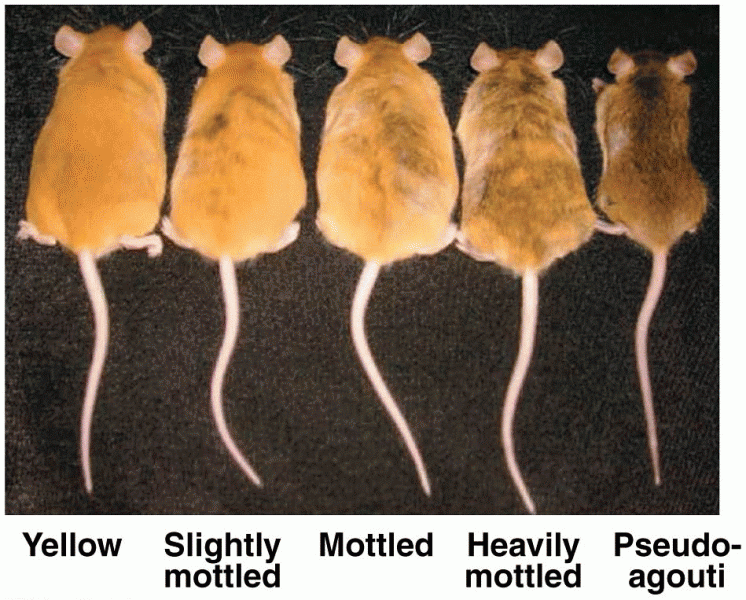 Variable expression of yellow phenotype in mice caused by diet-related epigenetic changes in the gen