Answer to Question 1
In the United States, the manufacture and sale of alcoholic beverages can be viewed during three significant time periods: pre-Prohibition, Prohibition, and post-Prohibition. In the pre-Prohibition period, taverns selling alcohol were an important part of community and political life. Prohibition was the time period from 1920 to 1932 . During this period, the manufacture and sale of alcoholic beverages was illegal. After Prohibition ended, each state and local community was allowed to regulate the sale of alcoholic beverages. As a result, the current laws related to the sale of alcohol vary widely, and managers must know the beverage sales-related laws in effect in the area in which they operate their businesses.
Answer to Question 2
When it is consumed, alcohol is absorbed into the blood of the drinker. The absorption takes place in the mouth, stomach, and small intestine and the alcohol is then distributed throughout the body. The amount of alcohol built up in a drinker's bloodstream is measured by blood alcohol content (BAC). Increasing BAC levels have a direct effect on a drinker's motor skills, judgment, and emotional state. An individual's actual BAC will be affected by a variety of factors including body size, gender, age, emotional state, and amount of food consumed. Alcohol is eliminated from the body by the liver at the rate of approximately one standard-sized drink per hour.


 The Tsavo Man-Eaters on display in the Field Museum of Natural History in Chicago, Illinois.
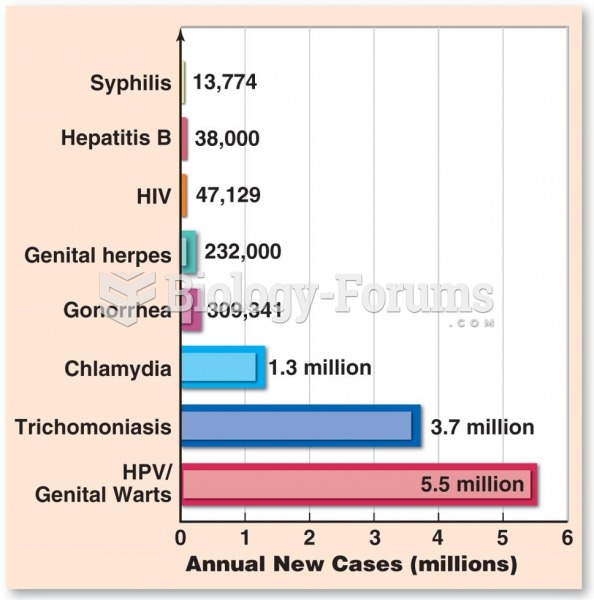 Common STIs in the United States
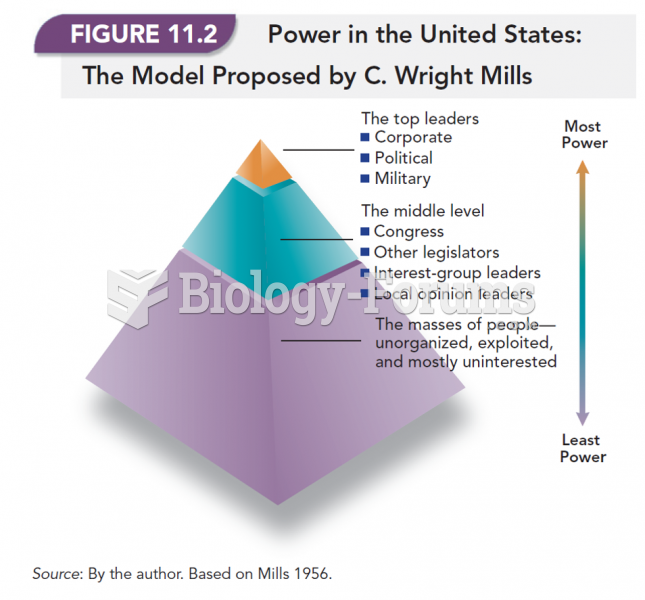 Power in the United States: The Model Proposed by C. Wright Mills
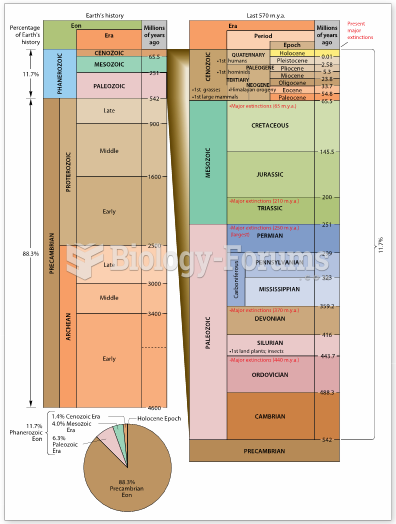 Climate History
 History Quiz Questions
 Gypsy moths native to Europe and Asia feed on oaks through much of the United States.