This topic contains a solution. Click here to go to the answer

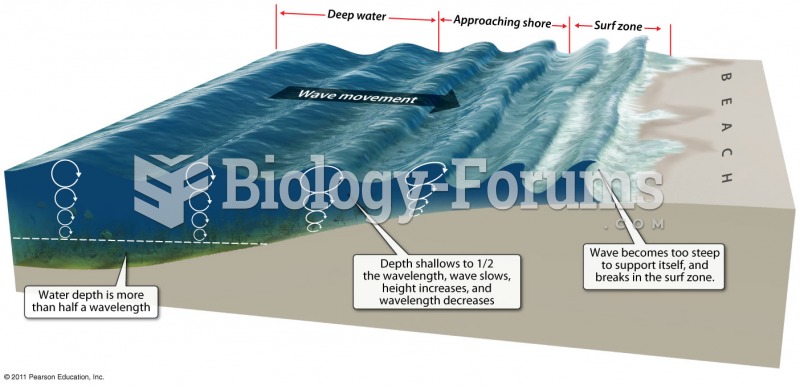
Author Question: The speed of a deep-water wave is proportional to ________. A) water depth B) wave frequency C) ... (Read 170 times)

wenmo

  • Hero Member
  • *****
  • Posts: 540
The speed of a deep-water wave is proportional to ________.
 
  A) water depth
  B) wave frequency
  C) wave height
  D) wave speed or celerity
  E) wavelength

Question 2

The most abundant marine macroscopic algae are members of the Division ________.
 
  A) Bacillariophyta
  B) Chlorophyta
  C) Chrysophyta
  D) Phaeophyta
  E) Rhodophyta


Related Topics

Need homework help now?

Ask unlimited questions for free

Ask a Question
Marked as best answer by a Subject Expert

Chocorrol77

  • Sr. Member
  • ****
  • Posts: 313
Answer to Question 1

E

Answer to Question 2

E


wenmo

  • Hero Member
  • *****
  • Posts: 540
Both answers were spot on, thank you once again


Did you know?

The term bacteria was devised in the 19th century by German biologist Ferdinand Cohn. He based it on the Greek word "bakterion" meaning a small rod or staff. Cohn is considered to be the father of modern bacteriology.

Did you know?

In 1835 it was discovered that a disease of silkworms known as muscardine could be transferred from one silkworm to another, and was caused by a fungus.

Did you know?

Adolescents often feel clumsy during puberty because during this time of development, their hands and feet grow faster than their arms and legs do. The body is therefore out of proportion. One out of five adolescents actually experiences growing pains during this period.

Did you know?

Oliver Wendell Holmes is credited with introducing the words "anesthesia" and "anesthetic" into the English language in 1846.

Did you know?

According to animal studies, the typical American diet is damaging to the liver and may result in allergies, low energy, digestive problems, and a lack of ability to detoxify harmful substances.

For a complete list of videos, visit our video library