This topic contains a solution. Click here to go to the answer

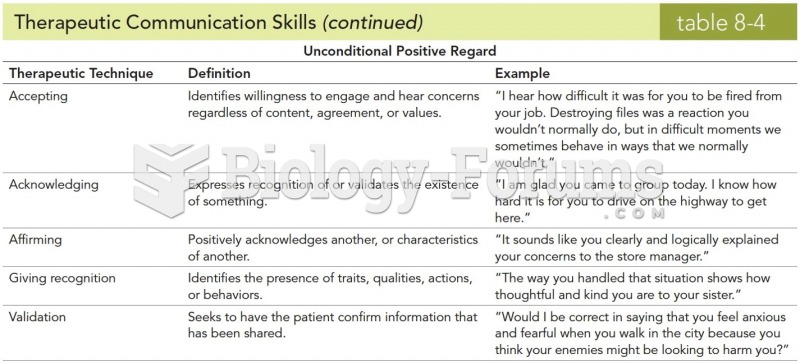
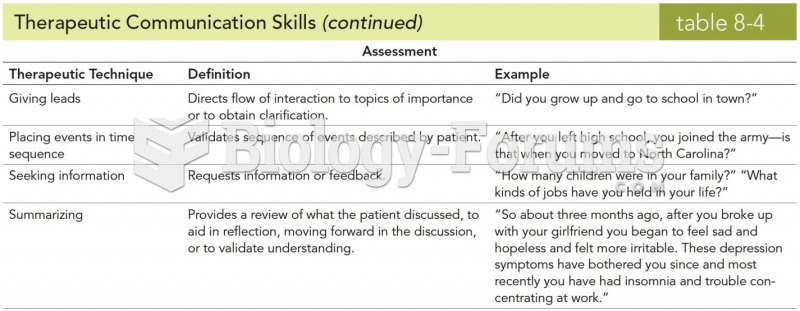
Author Question: What percentage of communication is nonverbal? a. 20 percent b. 50 percent c. 70 percent d. 90 ... (Read 152 times)

sheilaspns

  • Hero Member
  • *****
  • Posts: 567
What percentage of communication is nonverbal?
 
  a. 20 percent
  b. 50 percent
  c. 70 percent
  d. 90 percent

Question 2

Separation anxiety usually develops as early as _____.
 
  a. 2 months
  b. 6 months
  c. 1 year
  d. 2 years


Related Topics

Need homework help now?

Ask unlimited questions for free

Ask a Question
Marked as best answer by a Subject Expert

chinwesucks

  • Sr. Member
  • ****
  • Posts: 341
Answer to Question 1

ANSWER: c

Answer to Question 2

ANSWER: b


sheilaspns

  • Member
  • Posts: 567
Reply 2 on: Sep 14, 2018
:D TYSM


adammoses97

  • Member
  • Posts: 337
Reply 3 on: Yesterday
Wow, this really help


Did you know?

Every 10 seconds, a person in the United States goes to the emergency room complaining of head pain. About 1.2 million visits are for acute migraine attacks.

Did you know?

Amoebae are the simplest type of protozoans, and are characterized by a feeding and dividing trophozoite stage that moves by temporary extensions called pseudopodia or false feet.

Did you know?

The highest suicide rate in the United States is among people ages 65 years and older. Almost 15% of people in this age group commit suicide every year.

Did you know?

The Food and Drug Administration has approved Risperdal, an adult antipsychotic drug, for the symptomatic treatment of irritability in children and adolescents with autism. The approval is the first for the use of a drug to treat behaviors associated with autism in children. These behaviors are included under the general heading of irritability and include aggression, deliberate self-injury, and temper tantrums.

Did you know?

Chronic necrotizing aspergillosis has a slowly progressive process that, unlike invasive aspergillosis, does not spread to other organ systems or the blood vessels. It most often affects middle-aged and elderly individuals, spreading to surrounding tissue in the lungs. The disease often does not respond to conventionally successful treatments, and requires individualized therapies in order to keep it from becoming life-threatening.

For a complete list of videos, visit our video library