After reading the paragraphs below, answer the questions that follow.
In 2004, scientists announced the discovery of the fossil remains of some extremely short early humans on the Indonesian island of Flores. The new species has been named Homo floresiensis. One hypothesis is that H. floresiensis evolved from Homo erectus, another early human species. How did a population of H. erectus become isolated on this remote island? Early humans constructed boats and rafts, so perhaps they were blown far off course by strong winds during a storm. H. erectus averaged almost 6 feet in height, but the remains show that adults of H. floresiensis were only about 3 feet tall. It is hypothesized that limited resources on this hot and humid island (only 31 square miles) exerted selection pressure, and succeeding generations began to shrink in size. Small bodies require less food, use less energy, and are easier to cool than larger bodies. Evolution of small size in similar circumstances has been observed in many other species but never before in humans. This find demonstrates that evolutionary forces operate on humans in the same way as on all other organisms.
If H. floresiensis were reunited with H. erectus at a much later date but the two populations could no longer interbreed, it would be correct to conclude that
◦ a reproductive barrier had evolved.
◦ H. floresiensis has become less fit than H. erectus.
◦ H. floresiensis is no longer fertile as a species.
◦ the two groups had been isolated for more than 50,000 years.


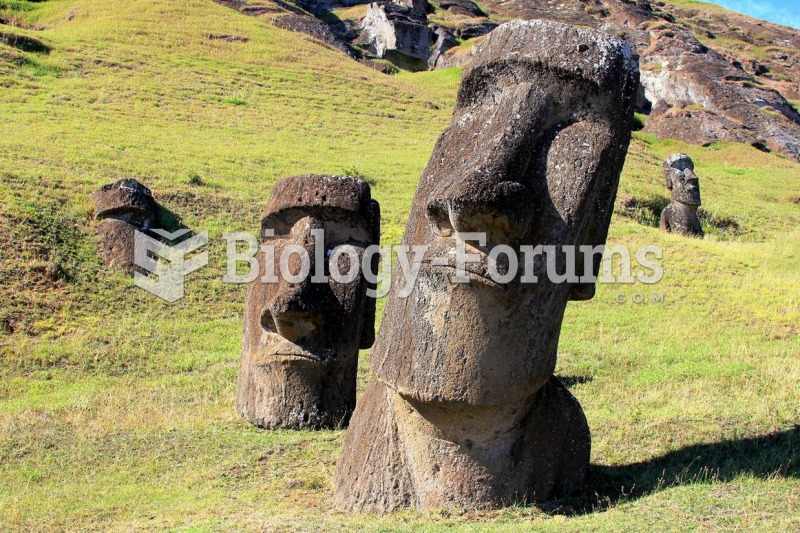 These monolithic figures from Easter Island suggest the contemplative nature of philosophy, which ca
 Surprised while reading
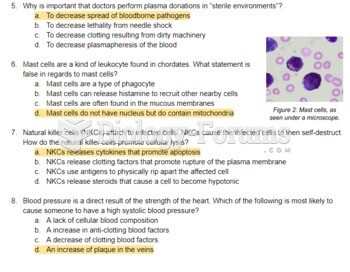 bio questions
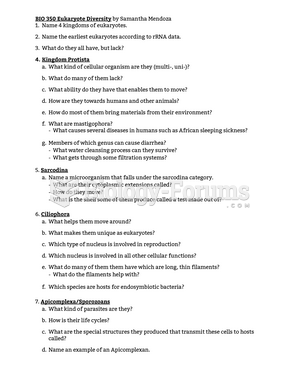 Some Biology Questions
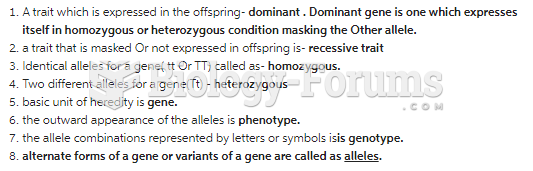 HELP PLEASE 13 QUESTIONS
 6 SUPPORT NEED IT SOON PLEASE ANSWER ALL