Physical symptoms associated with somatization disorder are often quite , and a person usually seeks treatment from different places over several years.
a. severe
b. vague
c. personal
d. recreational
Question 2
As you read the textbook you will undoubtedly identify with some of the symptoms and disorders that are presented. This
a. most likely indicates that you have a mental disorder.
b. does not necessarily mean that you have a mental disorder.
c. indicates abnormal behavior that should be evaluated immediately.
d. confirms that a high percentage of the population suffers from mental disorders.


 Child with cerebral palsy has abnormal muscle tone and lack of physical coordination.
 Acromegaly. Acromegaly is a metabolic disorder in which excessive amounts of growth hormone are secr
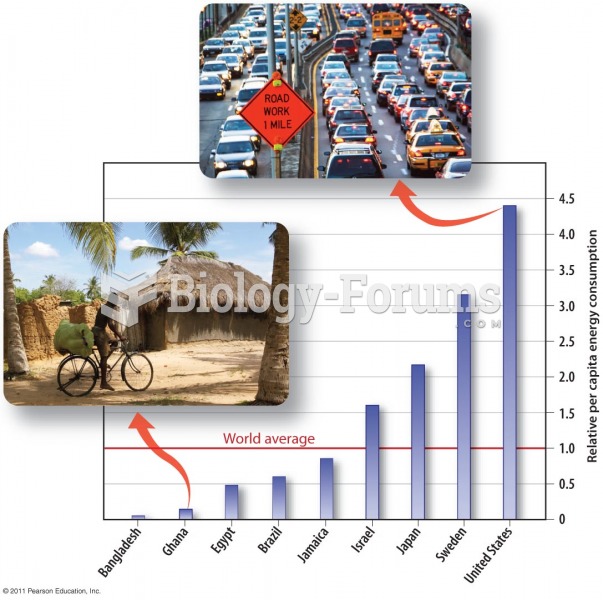 Relative Energy Consumption per Person for Selected Countries
 Edward Bellamy, author of the utopian novel Looking Backward (1888) Bellamy’s socialism worried many
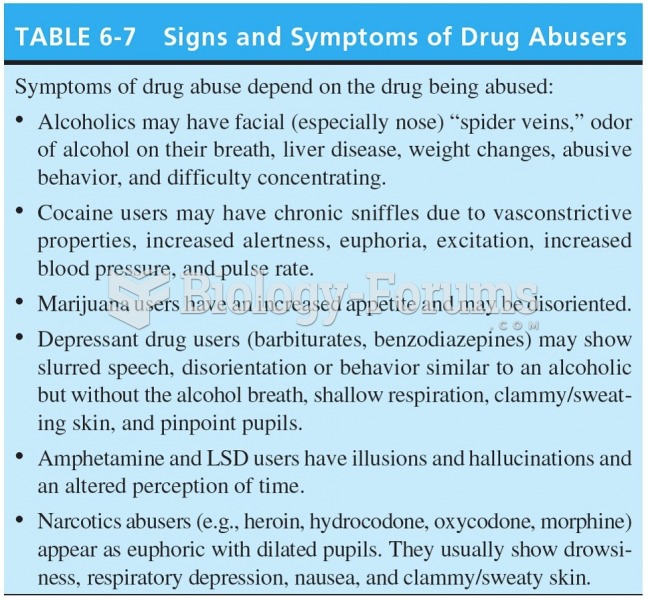 Signs and Symptoms of Drug Abusers
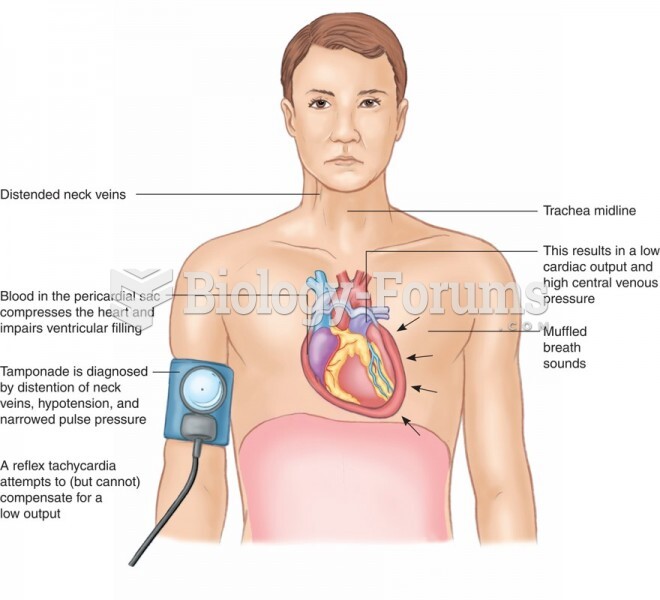 Physical Findings of Cardiac Tamponade