Mei and Daiki married in their native Japan in 2005. They have three children aged 6, 8, and 10. Daiki works long days and Mei takes care of all the home and childcare tasks. Mei is very unhappy in her marriage.
What will probably prevent her from getting divorced? a) The collectivist culture does not view the children as individuals, but rather property of the parents.
b) The patriarchal society does not allow women to divorce their husbands, but husbands may divorce their wives.
c) The patriarchal society automatically gives full custody to the mother, but does not provide any financial support.
d) The collectivist culture views the father's rights as more important than everyone else in the family.
Question 2
Which explains the difference between relative poverty and absolute poverty?
a) Relative poverty is comparative, and absolute poverty is a complete lack of basic resources.
b) Relative poverty is common in countries such as India and Africa, and absolute poverty is the focus in countries such as the United States.
c) Absolute poverty is easier to overcome than relative poverty because there are more programs for assistance.
d) Purchasing power is used to determine relative poverty, and the poverty threshold is used to determine absolute poverty.


 Sika deer in Shiretoko Peninsula, Hokkaido, Japan
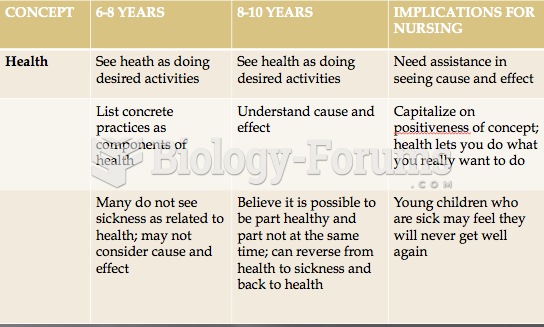 Concept of Health by Children
 In 2005 historian Angela Lakwete used this print as the cover of Inventing the C
 Reading and talking about a picture book is one effective way to improve children’s language ...
 If you get a chance, look through popular read-aloud books for young children, such as The Very ...
 Anglin's estimates of the total vocabulary of children in Grades 1, 3, and 5