This topic contains a solution. Click here to go to the answer

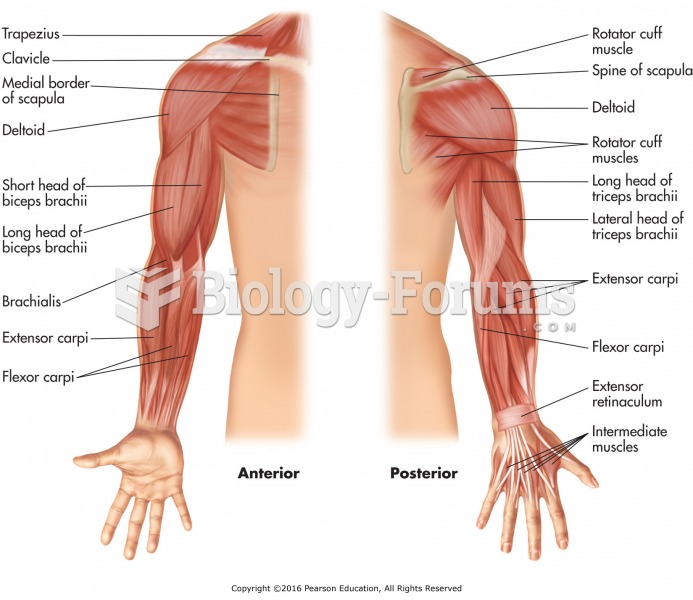
Author Question: The Dumbbell Lateral Raise exercise develops the deltoid and trapezius muscles. Indicate ... (Read 46 times)

RODY.ELKHALIL

  • Hero Member
  • *****
  • Posts: 591
The Dumbbell Lateral Raise exercise develops the deltoid and trapezius muscles.


  Indicate whether the statement is true or false

Question 2

You must exercise the exact muscles you want to develop. This is explained by which one of the following basic weight training principles?
   
 A. Specificity
   B. Overload
   C. Progression
   D. Concentration


Related Topics

Need homework help now?

Ask unlimited questions for free

Ask a Question
Marked as best answer by a Subject Expert

otokexnaru

  • Sr. Member
  • ****
  • Posts: 314
Answer to Question 1

T

Answer to Question 2

A


RODY.ELKHALIL

  • Member
  • Posts: 591
Reply 2 on: Aug 6, 2018
:D TYSM


nothere

  • Member
  • Posts: 324
Reply 3 on: Yesterday
Excellent


Did you know?

It is important to read food labels and choose foods with low cholesterol and saturated trans fat. You should limit saturated fat to no higher than 6% of daily calories.

Did you know?

Nearly 31 million adults in America have a total cholesterol level that is more than 240 mg per dL.

Did you know?

According to the American College of Allergy, Asthma & Immunology, more than 50 million Americans have some kind of food allergy. Food allergies affect between 4 and 6% of children, and 4% of adults, according to the CDC. The most common food allergies include shellfish, peanuts, walnuts, fish, eggs, milk, and soy.

Did you know?

Oxytocin is recommended only for pregnancies that have a medical reason for inducing labor (such as eclampsia) and is not recommended for elective procedures or for making the birthing process more convenient.

Did you know?

Dogs have been used in studies to detect various cancers in human subjects. They have been trained to sniff breath samples from humans that were collected by having them breathe into special tubes. These people included 55 lung cancer patients, 31 breast cancer patients, and 83 cancer-free patients. The dogs detected 54 of the 55 lung cancer patients as having cancer, detected 28 of the 31 breast cancer patients, and gave only three false-positive results (detecting cancer in people who didn't have it).

For a complete list of videos, visit our video library