Answer to Question 1
Answer: At puberty, revisions occur in the way the brain regulates the timing of sleep, perhaps because of increased neural sensitivity to evening light. As a result, adolescents go to bed much later than they did as children. Yet they still need about nine hours of sleep. When the school day begins early, their sleep needs are not satisfied. This sleep phase delay strengthens with pubertal growth. But todays teenagerswith more evening social activities, part-time jobs, and bedrooms equipped with screen mediaget much less sleep than teenagers of previous generations. Sleep-deprived adolescents display declines in executive function and both cognitive and emotional self-regulation. As a result, they are more likely to achieve less well in school; suffer from anxiety, irritability, and depressed mood; and engage in high-risk behaviors that result in motor vehicle collisions and arrests for delinquency. Sleep rebound on weekends sustains the pattern by leading to difficulty falling asleep on subsequent evenings. Later school start times ease but do not eliminate sleep loss. Educating teenagers about the importance of sleep is vital.
Answer to Question 2
Answer: Heredity makes an important contribution to sexual orientation: Identical twins of both sexes are more likely than fraternal twins to share a homosexual orientation; so are biological (as opposed to adoptive) relatives. Furthermore, male homosexuality tends to be more common on the maternal than on the paternal side of families, suggesting that it may be X-linked. Indeed, one gene-mapping study found that among 40 pairs of gay brothers, 33 (82 percent) had an identical segment of DNA on the X chromosome. One or several genes in that region might predispose males to develop same-sex attraction. How might heredity influence sexual orientation? According to some researchers, certain genes affect the level or impact of prenatal sex hormones, which modify brain structures in ways that induce homosexual feelings and behavior. Keep in mind, however, that environmental factors can also alter prenatal hormones. Girls exposed prenatally to very high levels of androgens or estrogenseither because of a genetic defect or from drugs given to the mother to prevent miscarriageare more likely to develop lesbian or bisexual orientations. Furthermore, gay men tend to be later in birth order and to have a higher-than-average number of older brothers. Perhaps mothers with several male children sometimes produce antibodies to androgens, reducing the prenatal impact of male sex hormones on the brains of later-born boys. The evidence to date indicates that genetic and prenatal biological influences contribute substantially to homosexuality. The origins of bisexuality are not yet known.


 Four different spindle attachments produce four second-division segregation patterns
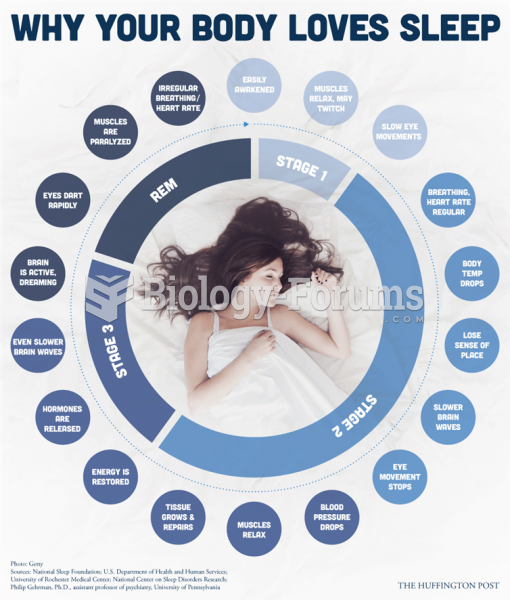 Why your body loves sleep
 Global Pressure Systems and Wind Patterns
 Icant keep calm, today is my due date
 Melatonin and Sleep
 Relative changes in distribution of sleep stages over the lifespan