Author Question: The possibility that an extraneous variable can become a confounding variable is eliminated ... (Read 128 times)

2125004343

  • Hero Member
  • *****
  • Posts: 566
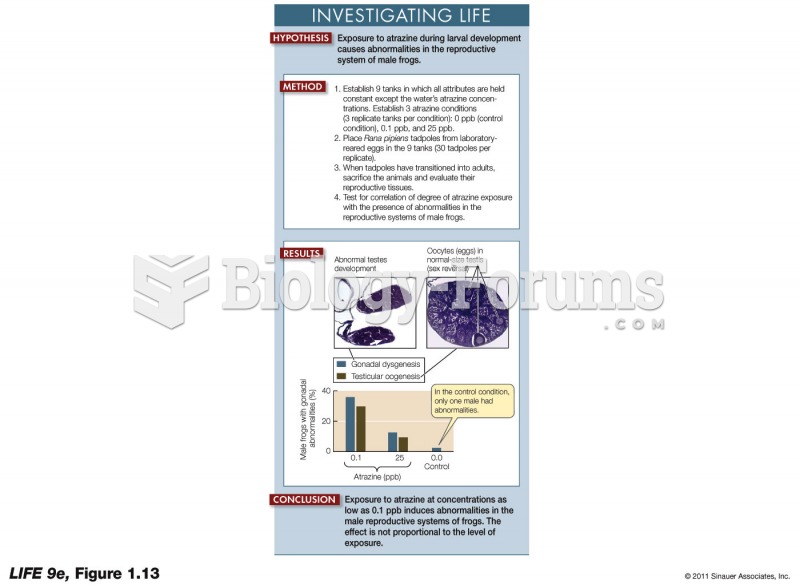
The possibility that an extraneous variable can become a confounding variable is eliminated completely by holding it constant.
 
  a. True
  b. False
  Indicate whether the statement is true or false

Question 2

The method of sampling that involves dividing the population into homogeneous subgroups and then taking a simple random sample in each subgroup is _______________.
 
  Fill in the blank(s) with correct word


alexanderhamilton

  • Sr. Member
  • ****
  • Posts: 334
Answer to Question 1

True

Answer to Question 2

stratified random sampling


Related Topics

Need homework help now?

Ask unlimited questions for free

Ask a Question
 

Did you know?

About one in five American adults and teenagers have had a genital herpes infection—and most of them don't know it. People with genital herpes have at least twice the risk of becoming infected with HIV if exposed to it than those people who do not have genital herpes.

Did you know?

The first successful kidney transplant was performed in 1954 and occurred in Boston. A kidney from an identical twin was transplanted into his dying brother's body and was not rejected because it did not appear foreign to his body.

Did you know?

Malaria was not eliminated in the United States until 1951. The term eliminated means that no new cases arise in a country for 3 years.

Did you know?

Oliver Wendell Holmes is credited with introducing the words "anesthesia" and "anesthetic" into the English language in 1846.

Did you know?

Lower drug doses for elderly patients should be used first, with titrations of the dose as tolerated to prevent unwanted drug-related pharmacodynamic effects.

For a complete list of videos, visit our video library