Answer to Question 1
Malthus predicted social chaos, based on his belief that a rising population would consume the world's resources.
The anti-Malthusian viewpoint, similar to the logic-of-growth viewpoint, is conservative because it expresses support for the status quo, in the belief that problems people create are problems people can solve.
Because of their pessimistic view of the future, liberal environmentalists are sometimes called neo-Malthusians. They agree with the warnings sounded two centuries ago by Malthus and support the limits-to-growth position.
Answer to Question 2
The logic-of-growth thesis supports economic development and asserts that people can solve whatever environmental problems may arise.
The limits-to-growth thesis states that societies have little choice but to curb development in order to avoid environmental collapse.
Liberals believe that government reforms such as mandatory recycling and strategies to reduce solid waste and develop cleaner-burning fuels are necessary to avoid eventual environmental collapse.
Conservatives acknowledge the reality of environmental problems, but argue that human beings will use their ingenuity and technology to solve them, with little need for government regulation.


 Selected Nonsteroidal Anti-Inflammatory Drugs
 This lithograph by Currier and Ives gives an erroneous impression of the “battle.” Major Robert Ande
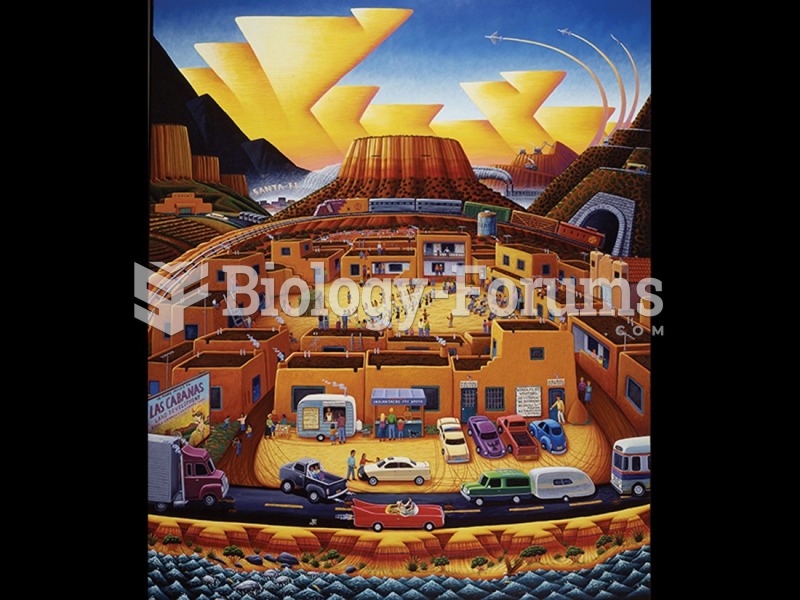 David P. Bradley (White Earth Oijbwe, and Mdewakaton Dakota), Indian Country Today.
 Anti-Inflammatory Drugs for Asthma
 Analgesics Used for Dental Pain: Nonsteroidal Anti-Inflammatory Drugs- Salicylates and Other ...
 How to find the constant (C) after finding the anti-derivative