This topic contains a solution. Click here to go to the answer

Author Question: An older patient is upset with a blood pressure reading of 180/78 mmHg. What response by the nurse ... (Read 112 times)

mcmcdaniel

  • Hero Member
  • *****
  • Posts: 550
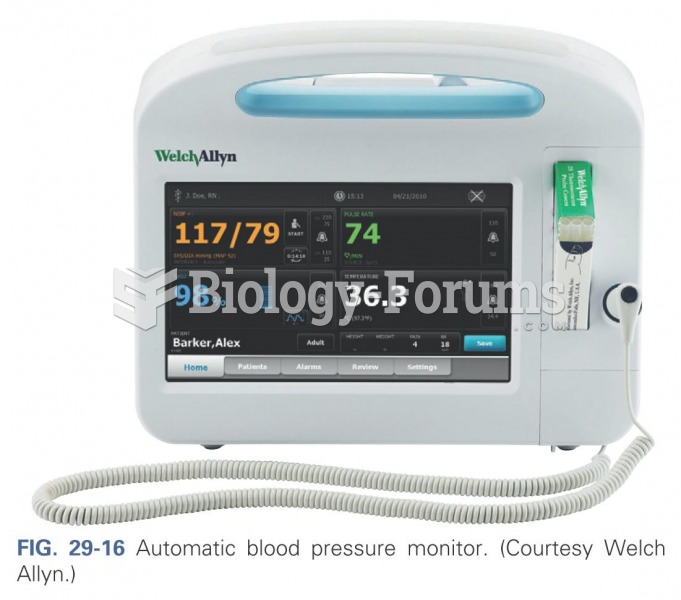
An older patient is upset with a blood pressure reading of 180/78 mmHg. What response by the nurse is best?
 
  a. It looks like you need blood pressure medicine now.
  b. Most people get hypertension when they get older.
  c. With age, blood vessels stiffen, raising blood pressure.
  d. Don't worry, there are lots of good me-dications for this.

Question 2

A patient has heart failure and takes spironolactone (aldactone). What diet selection from the menu shows that the patient needs more education?
 
  a. A low-fat chicken salad sandwich
  b. Salt-free vegetable soup
  c. Broiled fish with lemon
  d. Salt substitute and pepper


Related Topics

Need homework help now?

Ask unlimited questions for free

Ask a Question
Marked as best answer by a Subject Expert

komodo7

  • Sr. Member
  • ****
  • Posts: 322
Answer to Question 1

C
With age, elastin in vessel walls decreases, making them stiffer. Systolic blood pressure (SBP) is increased in older adults because of a loss of arterial distensibility resulting from arterial stiffen-ing. The other responses do not offer any useful information on the cause of the patient's condi-tion.

Answer to Question 2

D
Older patients have difficulty excreting potassium because of age-related kidney changes. This patient also takes aldactone, a potassium sparing diuretic. If the patient adds a salt substitute, normally high in potassium, the chances of developing hyperkalemia are high. The nurse needs to provide education on other ways to flavor foods. The other diet choices are fine.


mcmcdaniel

  • Member
  • Posts: 550
Reply 2 on: Jul 11, 2018
Wow, this really help


alexanderhamilton

  • Member
  • Posts: 334
Reply 3 on: Yesterday
:D TYSM


Did you know?

Automated pill dispensing systems have alarms to alert patients when the correct dosing time has arrived. Most systems work with many varieties of medications, so patients who are taking a variety of drugs can still be in control of their dose regimen.

Did you know?

Between 1999 and 2012, American adults with high total cholesterol decreased from 18.3% to 12.9%

Did you know?

As many as 28% of hospitalized patients requiring mechanical ventilators to help them breathe (for more than 48 hours) will develop ventilator-associated pneumonia. Current therapy involves intravenous antibiotics, but new antibiotics that can be inhaled (and more directly treat the infection) are being developed.

Did you know?

In 2006, a generic antinausea drug named ondansetron was approved. It is used to stop nausea and vomiting associated with surgery, chemotherapy, and radiation therapy.

Did you know?

On average, someone in the United States has a stroke about every 40 seconds. This is about 795,000 people per year.

For a complete list of videos, visit our video library