Author Question: What marked advantage does primary intention have over other phases of wound healing? a. Healing ... (Read 145 times)

tichca

  • Hero Member
  • *****
  • Posts: 554
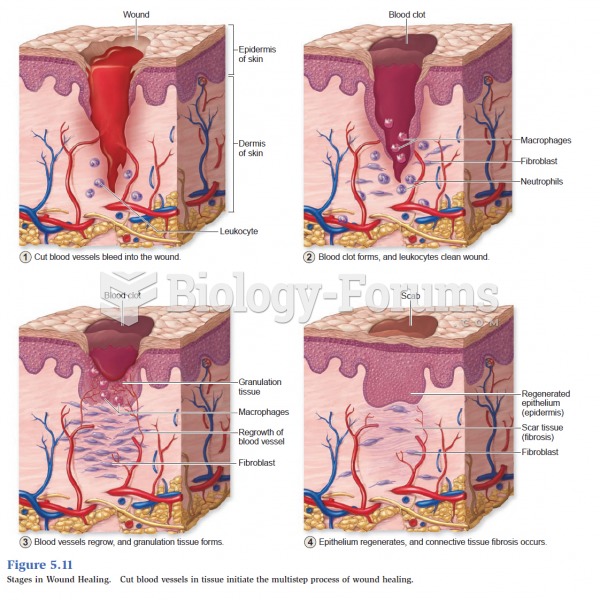
What marked advantage does primary intention have over other phases of wound healing?
 
  a. Healing is rapid
  b. Healing rarely becomes infected
  c. Minimal scarring results
  d. Healing is painless

Question 2

How can the nurse help reduce the stress of a hospital admission? (Select all that apply.)
 
  a. Show the patient how bedside equipment works.
  b. Explain the need to establish a clear source of reimbursement.
  c. Give simple explanation of policies.
  d. Involve the patient in the plan of care.
  e. Keep family interventions to a minimum.


Dinolord

  • Sr. Member
  • ****
  • Posts: 313
Answer to Question 1

ANS: C
Wounds that heal by primary intention have minimal scarring.

Answer to Question 2

ANS: A, C, D
An empathic reception reduces anxiety of admission; for instance, demonstrating how bedside equipment works, explaining hospital policies, and involving the patient in the plan of care from the start all help to reduce the stress of a hospital admission. Securing financial information is not a role of the nurse, and family interventions are frequently helpful in reducing stress.


Related Topics

Need homework help now?

Ask unlimited questions for free

Ask a Question
 

Did you know?

In ancient Rome, many of the richer people in the population had lead-induced gout. The reason for this is unclear. Lead poisoning has also been linked to madness.

Did you know?

Long-term mental and physical effects from substance abuse include: paranoia, psychosis, immune deficiencies, and organ damage.

Did you know?

Many medications that are used to treat infertility are injected subcutaneously. This is easy to do using the anterior abdomen as the site of injection but avoiding the area directly around the belly button.

Did you know?

It is difficult to obtain enough calcium without consuming milk or other dairy foods.

Did you know?

The toxic levels for lithium carbonate are close to the therapeutic levels. Signs of toxicity include fine hand tremor, polyuria, mild thirst, nausea, general discomfort, diarrhea, vomiting, drowsiness, muscular weakness, lack of coordination, ataxia, giddiness, tinnitus, and blurred vision.

For a complete list of videos, visit our video library