Yelling, screaming, or fighting a sexual attacker may be effective in all of the following situations EXCEPT when
A) you know your attacker.
B) your attacker is unarmed.
C) your attacker is armed.
D) you are in a location where you may be able to escape by temporarily disabling or distracting your attacker.
Question 2
All of the following statements are true regarding date rape drugs EXCEPT
A) they cause the victim to become weak or confused.
B) they include the club drugs Ketamine and GHB.
C) they are typically administered to an intoxicated victim via a needle and syringe.
D) they can make it difficult for the victim to remember what happened.


 Examples of the results of sexual selection, a type of natural selection.
 Gorillas live in one-male or multimale groups, from which females emigrate at sexual materity.
 The 2012 U.S. presidential campaign rang with “get tough” cries to end Iran’s nuclear capacity and c
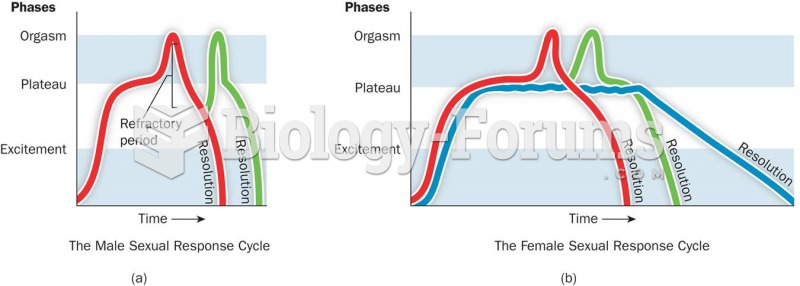 Masters and Johnson’s Four-Phase Model of the Sexual Response Cycle
 Sexual Scripts
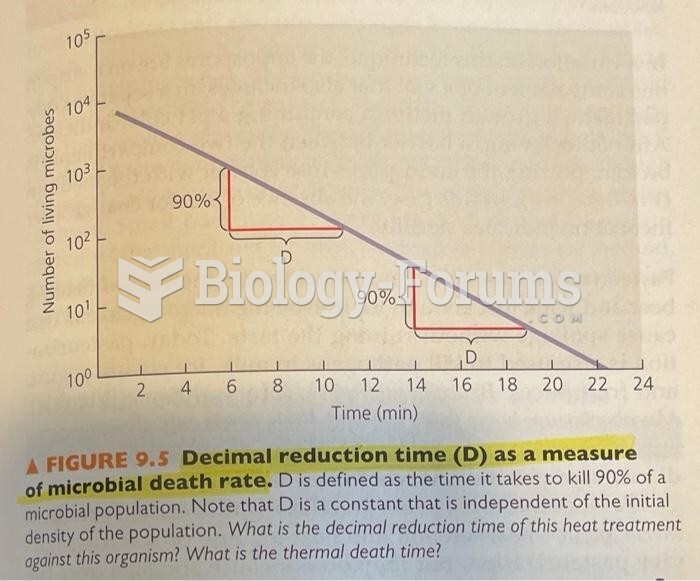 How to calculate the DRT to determine which is more effective against the pathogen