This topic contains a solution. Click here to go to the answer

Author Question: The client is beginning an exercise program for the health benefits and to aid in preventing weight ... (Read 88 times)

mrsjacobs44

  • Hero Member
  • *****
  • Posts: 500
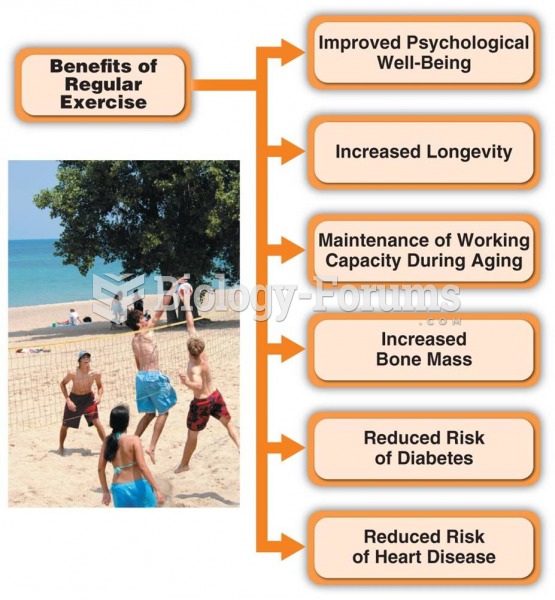
The client is beginning an exercise program for the health benefits and to aid in preventing weight gain.
 
  How many minutes per week should the client plan on performing moderate-intensity physical activity to meet the recommended number of minutes? A) 60 minutes/week C) 120 minutes/week
  B) 90 minutes/week D) 150 minutes/week

Question 2

The client is being admitted for outpatient surgery. During the assessment, the nurse notes the client is 6 ft 3 in tall and weighs 97 kg. What is this client's BMI?
 
  A) 24 B) 27 C) 30 D) 33


Related Topics

Need homework help now?

Ask unlimited questions for free

Ask a Question
Marked as best answer by a Subject Expert

stallen

  • Sr. Member
  • ****
  • Posts: 336
Answer to Question 1

D
Feedback:
For substantial health benefits, adults should do at least 150 minutes (2 hours and 30 minutes) a week of moderate-intensity aerobic physical activity. Aerobic activity should be performed in episodes of at least 10 minutes and spread throughout the week.

Answer to Question 2

B
Feedback:
The formula to calculate BMI is weight in kilograms divided by height in meters squared or weight in pounds divided by height in inches squared multiplied by 703 . First, convert the 97 kg to pounds by multiplying by 2.2 (97  2.2 = 213.4); and then 213.4 / 5625  703 = 26.67 or rounded up to 27.


mrsjacobs44

  • Member
  • Posts: 500
Reply 2 on: Aug 2, 2018
Thanks for the timely response, appreciate it


amandanbreshears

  • Member
  • Posts: 320
Reply 3 on: Yesterday
:D TYSM


Did you know?

Every 10 seconds, a person in the United States goes to the emergency room complaining of head pain. About 1.2 million visits are for acute migraine attacks.

Did you know?

To combat osteoporosis, changes in lifestyle and diet are recommended. At-risk patients should include 1,200 to 1,500 mg of calcium daily either via dietary means or with supplements.

Did you know?

Anti-aging claims should not ever be believed. There is no supplement, medication, or any other substance that has been proven to slow or stop the aging process.

Did you know?

Thyroid conditions cause a higher risk of fibromyalgia and chronic fatigue syndrome.

Did you know?

Calcitonin is a naturally occurring hormone. In women who are at least 5 years beyond menopause, it slows bone loss and increases spinal bone density.

For a complete list of videos, visit our video library