When 14-year-old Jonathan goes out for the high school cross-country team, he discovers that he's the slowest runner on the team. After three weeks of daily practice with the team, his speed and endurance improve very little, if at all. Given what we know about how expectancies and values are interrelated in the secondary school years, we can reasonably guess that Jonathan will:
a. expect greater success as more time elapses.
b. value cross-country running more than he has previously.
c. value cross-country running less than he has previously.
d. try to convince his teammates that he's a better runner than he really is.
Question 2
Given what motivation theorists tell us about expectancies and values, which one of the following activities are you least likely to value?
a. One that will make you look good in front of your peers
b. One at which you will have to work exceptionally hard to succeed
c. One that you don't enjoy but is important for career success
d. One that will enable you to obtain a desired outcome


 The high-voltage disconnect switch is in the trunk area on a Toyota Prius. High-voltage lineman’s ...
 Overfished per year
 The developing and emerging nations have high rates of population growth
 Cost of Going to School
 Trihybrid Cross
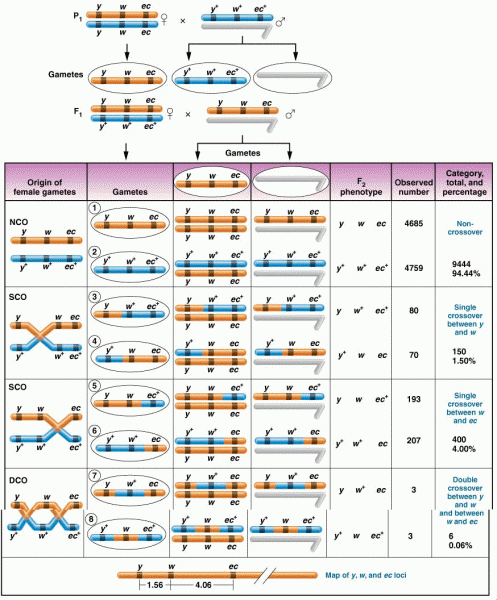 A three-point mapping cross in Drosophila melanogaster